Monsoon Travel in Bangladesh 2026: Best Rainy-Season Trips, Safety in Floods and Landslides, and What to Pack
When the rains come, Bangladesh turns into a country of water: flooded forests, haors like inland seas and waterfalls at full roar. Here is where to go in the monsoon, and how to come back safely.

For many Bangladeshis, the monsoon is the most beautiful time of the year. The first heavy rain of Ashar cools the cracked fields, rivers swell and turn brown, and whole landscapes change shape. Forests in Sylhet stand waist-deep in water. The haors of the northeast become inland seas dotted with village islands. Waterfalls in the hills, trickles in March, now roar. And tourist spots that are packed in winter are quieter and cheaper.
The monsoon also brings real risks: flash floods in the northeast, landslides in the hills, rough rivers and overloaded boats, lightning, and mosquito-borne disease. None of this means you should stay home. It means you should pick the right places, time them well and travel with care.
This guide covers the best monsoon trips in Bangladesh, the rules and closures to check in 2026, how to stay safe in floods, landslides and on the water, what to pack, sample plans and rough costs.
The monsoon at a glance
| Season | Barsha (Ashar–Shraban), roughly mid-June to mid-August; heavy rain usually June – September |
| Best for | Swamp forests, haors, hill rivers, waterfalls, tea gardens, clouds in the hills, river journeys |
| Top trips | Ratargul, Tanguar Haor, Bichanakandi and Lalakhal, Jaflong, floating guava market, Sreemangal, Sajek |
| Main risks | Flash floods (Sylhet, Sunamganj), landslides (hill districts), boats, lightning, drowning, dengue |
| Closed or restricted | Sundarbans (1 Jun – 31 Aug), Saint Martin's Island (outside the winter season), Thanchi–Tindu road to Nafakhum (closed to tourist vehicles since October 2026; area reopened August 2026) |
| Check before you go | Bangladesh Meteorological Department, Flood Forecasting and Warning Centre, local administration notices |
Best monsoon trips
1. Ratargul Swamp Forest, Sylhet
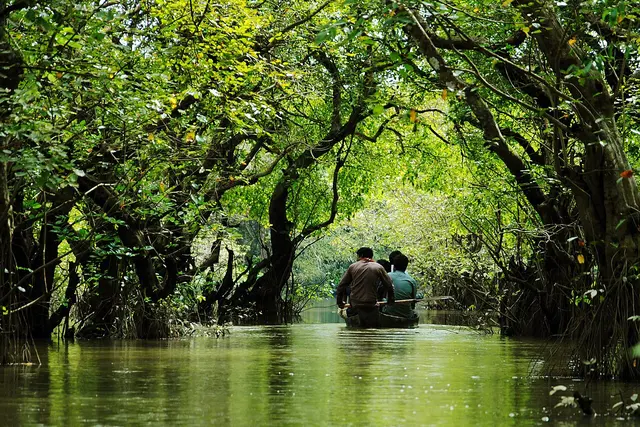
Best: June – September. Ratargul in Gowainghat is a freshwater swamp forest that you can only really see in the rains, when the trees stand in water and small wooden boats glide between them. The light is green, the water is dark and still, and the only sounds are birds and oars. The Forest Department charges an entry fee and has set boat charges in the past, so check the current rates at the ghat. Go early to beat the crowds, keep noise down and throw nothing in the water. In the dry season the water drops so low that the magic is mostly gone.
See our Ratargul destination page and the Sylhet travel guide.
2. Tanguar Haor by houseboat, Sunamganj
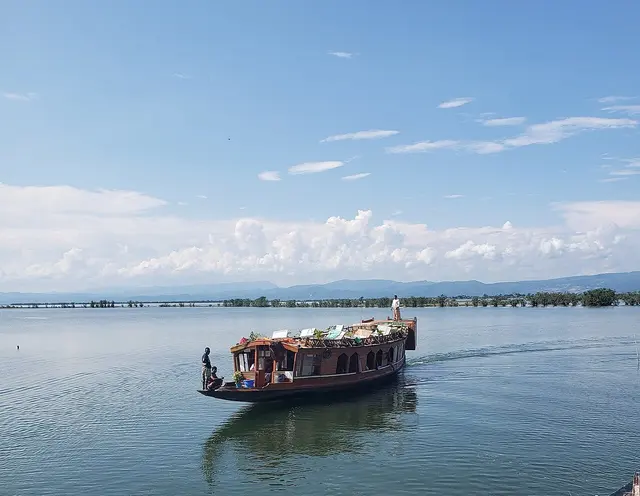
Best for water: June – September. Tanguar Haor, a Ramsar wetland near the Meghalaya border, becomes a vast sheet of water in the monsoon, with hijal and koroch trees standing in it, village islands and the hills on the horizon. A night or two on a houseboat is one of the great Bangladesh experiences.
2026 rules to know. In August 2026 the Sunamganj district administration issued a directive under the Tanguar and Hakaluki Haor Protection Order, 2025. According to The Business Standard and Prothom Alo:
- Houseboats and tourist vessels are barred from the haor's Ecologically Critical Area.
- All houseboats must be registered with the deputy commissioner's office.
- Loud music, microphones and parties on board are banned, and so is single-use plastic.
- Boats must carry life jackets, lifebuoys and fire extinguishers, have waste bins and a septic tank, and brief guests on a code of conduct.
- Tourist trips are suspended in storms, heavy rain and lightning.
So book only with a registered operator, expect routes to avoid the core area, and treat a weather cancellation as protection, not bad luck. Book on our Tanguar Haor destination page.

3. Bichanakandi, Lalakhal and Jaflong, Sylhet
Best: June – October. In the rains, clear streams from the Meghalaya hills rush over the stone beds of Bichanakandi, the Piyain runs full at Jaflong, and Lalakhal's blue-green water is at its best in the clear weeks after heavy rain. All three can be done as day trips from Sylhet city.
Two warnings. First, these rivers can rise suddenly after rain upstream in India, with no warning on the Bangladesh side. Second, news reports describe heavy illegal stone extraction at Jaflong, Bichanakandi and nearby Bholaganj in 2024–25, which has changed parts of the landscape. See our Bichanakandi & Lalakhal and Jaflong pages.

4. Waterfalls: Nafakhum and others
The hills are at their wildest in the rains, and waterfalls are at full flow from July to September. But check access before you plan anything.
- Nafakhum (Bandarban): the famous wide fall on the Remakri river was closed to tourists from October 2022 during security operations. Ruma and Thanchi partly reopened in June 2025, and on 12 August 2026 the district administration reopened the Tindu–Nafakhum area. In mid-October 2026, after a tourist vehicle fell into a ravine on 5 October and two tourists died, the Thanchi upazila administration banned tourist vehicles on the Thanchi–Tindu road until it is repaired. The monsoon adds its own risk: in July 2026 heavy rain closed Bandarban's tourist spots for several days, and about 90 tourists were stranded around Nafakhum and Amiyakhum before being brought back to Thanchi. Check the current route and rules with the Thanchi upazila administration before you go, travel only with a registered guide, and never swim near the falls. See our Bandarban destination page.
- Hajachora (on the Sajek road): a short walk from the road and at its best in the monsoon. See our Sajek Valley guide.
- Hum Hum (Moulvibazar): a muddy jungle trek in Kamalganj, only with a local guide.
- Mirsharai waterfalls (Chattogram): popular with students, but a 2024 Bonik Barta report counted 11 tourist deaths in five years at the area's falls, mostly in the rainy season. Treat every plunge pool as dangerous.

5. The floating guava market, Barishal
Best: July – August. In the canals where Barishal, Jhalokathi and Pirojpur meet, farmers row boats piled with green guavas to floating markets such as Bhimruli. Take the overnight launch from Sadarghat for the full river experience. Read our Barishal launch and floating market guide.
6. Sreemangal's tea gardens
The tea estates are at their greenest in the rains, and the forest at Lawachara drips and steams. Trails are muddy and leeches are everywhere, but crowds are thin and resorts are cheaper. See our Sreemangal travel guide.
7. Clouds at Sajek and the lake at Rangamati
From June onwards, Sajek is famous for its dawn "sea of clouds", and Kaptai Lake around Rangamati is full, with waterfalls like Shuvolong flowing. The hill roads can be hit by landslides, so check before you go. See our Sajek Valley guide.
Where not to go in the monsoon
- The Sundarbans is closed to tourists from 1 June to 31 August every year. See our Sundarbans guide.
- Saint Martin's Island is open to tourists only in the winter season under government rules. See our Saint Martin's guide.
- Sea beaches like Cox's Bazar and Kuakata are open but rough. Swimming is often unsafe, and storm signals are common.
Safety in rain, floods and landslides
Flash floods (Sylhet and Sunamganj)
Rivers in the northeast are fed by the very heavy rainfall over Meghalaya and can rise within hours. In June 2022, floods submerged large parts of Sylhet and Sunamganj. In the monsoon:
- Check the Flood Forecasting and Warning Centre (ffwc.gov.bd) and the Bangladesh Meteorological Department before and during your trip.
- Keep plans flexible. Have a backup day, and don't push on if roads are flooding.
- Avoid riverbeds and stone beds during or after heavy rain, especially at Bichanakandi and Jaflong.
- Follow the local administration. If spots or boat routes are closed, respect it.
Landslides (hill districts)
The Chittagong Hill Tracts and parts of Chattogram and Cox's Bazar are landslide-prone in heavy rain. In June 2017, landslides in Rangamati, Chattogram and Bandarban killed at least 150 people.
- Avoid hill travel during and just after very heavy rain.
- Don't stay in rooms built against cut hillsides, and don't linger under steep slopes.
- Watch for warning signs: cracks, falling stones, muddy water running down a slope.
- Leave early. If roads close, you could be stuck for a day or more.
Boats and water
Most monsoon trips involve a boat. Your rules:
- Wear a life jacket on every boat, even short rides. If there isn't one, ask for one or don't go.
- Don't board overloaded boats, and don't sit on the roof of a trawler or launch.
- Never swim in fast water, at the base of a waterfall or in a river after rain. Many drownings involve young people who could not swim.
- Stay off the water during lightning.
Lightning
Bangladesh has many lightning deaths each year, mostly in the pre-monsoon and monsoon. When a storm approaches, get indoors or into a vehicle. Avoid open fields, open boats, riverbanks and lone trees.
Health
- Dengue peaks during and after the monsoon. Use repellent, especially at dawn and dusk, and wear long sleeves.
- Drink only bottled or treated water, and carry oral rehydration salts.
- Leeches are common on forest trails. Long socks, closed shoes and salt or repellent help.
- Snakes move to higher ground in floods. Watch where you step, and use a torch at night.
Emergency
In an emergency, call 999, Bangladesh's national emergency number for police, fire service and ambulance. Save your hotel's and guide's numbers, and share your plan with someone at home.

Where to stay in the monsoon
- Sylhet city for Ratargul, Bichanakandi, Lalakhal and Jaflong day trips.
- A registered houseboat on Tanguar Haor, booked through a registered operator.
- Barishal city or the launch cabin for the floating market.
- Tea-garden resorts in Sreemangal.
- Monsoon discounts are common. Check that the room is not on low, flood-prone ground and that it has backup power.
What to pack
- Rain gear: a light rain jacket or poncho and a compact umbrella.
- Clothes: quick-dry shirts and trousers. Avoid jeans, which stay wet for days.
- Footwear: sandals or shoes with good grip that can get wet.
- Dry bags: a dry bag or zip-lock bags for your phone, cash and documents.
- Power: a power bank, because outages are more frequent in storms.
- Health kit: mosquito repellent, oral rehydration salts, basic medicines, antiseptic and plasters.
- For forests: long socks against leeches and a small torch.
- Cash in small notes. Card and mobile-banking signals can drop in remote areas.
Sample monsoon plans
3 days, Sylhet water circuit.
- Night 0: train or bus from Dhaka to Sylhet.
- Day 1: Ratargul by boat in the morning, Bichanakandi in the afternoon (if rivers are safe).
- Day 2: Lalakhal by boat, then Jaflong.
- Day 3: Sreemangal tea gardens on the way back, then the evening train to Dhaka.
2 days, Tanguar Haor houseboat.
- Night 0: bus to Sunamganj (about 6 hours).
- Day 1–2: a houseboat trip with a registered operator, within the 2026 rules, then return.
2 days, river south.
- Night 0: launch from Sadarghat to Barishal.
- Day 1: the Bhimruli floating guava market (July–August).
- Day 2: Durga Sagar, then the launch or bus home.
Estimated budget (per person)
These are approximate ranges for planning, based on group sharing. Monsoon prices are often lower than in winter, except during Eid. Verify before you travel.
| Trip | Approximate range | Notes |
|---|---|---|
| Ratargul and Sylhet (2 days) | ≈ ৳4,000 – ৳7,000 | Train or bus, shared transport and boats |
| Tanguar Haor houseboat (2 days) | ≈ ৳5,000 – ৳10,000 | Depends on boat class and group size |
| Floating guava market (2 days) | ≈ ৳3,500 – ৳6,000 | Shared launch cabin, local boats |
| Sreemangal (2 days) | ≈ ৳3,500 – ৳6,000 | Train, simple resort |
Responsible monsoon travel
- Take your plastic home. Haors and swamp forests trap waste for years.
- Keep it quiet. Loud music scares wildlife and is now banned on Tanguar Haor houseboats.
- Don't pick plants or remove stones. Stone extraction is already damaging Sylhet's rivers.
- Support local boatmen and guides, and pay fair prices. Many earn most of their year's income in these few months.
Travel with a group
Monsoon trips are easier and safer in a group with a guide who knows the water levels that week. BanglaTrips runs Ratargul, Tanguar Haor and floating market group tours in season, with registered boats and life jackets for everyone. See upcoming departures on our Ratargul, Tanguar Haor and floating guava market pages.
Frequently asked questions
When is the monsoon in Bangladesh? Roughly June to September, with the core season (Ashar–Shraban) from mid-June to mid-August.
Is monsoon travel safe? Yes, with planning: check forecasts, wear life jackets, avoid fast water and hills in heavy rain.
What are the best monsoon trips? Ratargul, Tanguar Haor, Bichanakandi and Lalakhal, Jaflong, the floating guava market, Sreemangal and Sajek.
Can I visit Nafakhum? The area reopened in August 2026, but the Thanchi–Tindu road has been closed to tourist vehicles since October 2026. Check with the Thanchi upazila administration first.
Are Tanguar Haor houseboats allowed? Yes, if registered, but not in the Ecologically Critical Area, and not in storms or heavy rain.
What should I pack? Rain gear, quick-dry clothes, grippy sandals, dry bags, a power bank, repellent and ORS.
Last updated: October 2026
Frequently asked questions
When is the monsoon in Bangladesh?
In the Bangla calendar, the rainy season (barsha) is Ashar and Shraban, roughly mid-June to mid-August. In practice the heavy rains usually run from June to September, with showers continuing into October. Most of the year's rain falls in these months.
Is it safe to travel in Bangladesh during the monsoon?
Yes, if you plan carefully. The main risks are flash floods in the Sylhet region, landslides in the Chittagong Hill Tracts, overcrowded or unsafe boats, lightning and drowning at waterfalls and rivers. Check weather and flood forecasts, follow local administration notices, wear life jackets on every boat and never swim in fast water.
What are the best monsoon destinations?
Ratargul swamp forest, Tanguar Haor by houseboat, Bichanakandi and Lalakhal, Jaflong, the floating guava market near Barishal in July–August, Sreemangal's tea gardens and Sajek's clouds. Waterfalls in Bandarban and elsewhere are at their fullest, but access to remote ones like Nafakhum changes often, so check with the local administration first.
Can I visit Nafakhum waterfall now?
Possibly, but check first. Tourists were banned from Nafakhum in October 2022 during security operations. The Bandarban district administration reopened the Tindu–Nafakhum area on 12 August 2026. Then in mid-October 2026, after a fatal accident on 5 October, the Thanchi upazila administration banned tourist vehicles on the Thanchi–Tindu road until it is repaired. Heavy rain can also close the area at short notice. Contact the Thanchi upazila administration before you plan a trip, and go only with a registered local guide.
Are Tanguar Haor houseboats still allowed?
Yes, but under strict rules. In August 2026 the Sunamganj administration barred houseboats and tourist vessels from the haor's Ecologically Critical Area, made registration compulsory and banned loud music, parties and single-use plastic. Trips are also suspended in storms, heavy rain and lightning. Book only with a registered operator.
What should I pack for a monsoon trip?
A light rain jacket or poncho, quick-dry clothes, sandals or shoes with good grip, a dry bag or zip bags for your phone and documents, a power bank, insect and leech protection, oral rehydration salts, basic medicines and a small torch.
Sources
Facts were checked against these sources when the guide was written. Conditions change, so confirm before you travel.
- Houseboat banned in Tanguar Haor's ecologically critical area (The Business Standard, 3 August 2026)tbsnews.net
- 13-point directive issued to protect Tanguar Haor (Prothom Alo English, August 2026)en.prothomalo.com
- Tourist from Dhaka goes missing while bathing at Bandarban's Nafakhum (bdnews24.com)bdnews24.com
- খুলে দেওয়া হলো নাফাকুমসহ দেশের ৪ পর্যটন স্পট (The Daily Campus, 12 August 2026)thedailycampus.com
- পর্যটকদের জন্য তিন্দু সড়ক বন্ধ ঘোষণা (Prothom Alo, 17 October 2026)prothomalo.com
- নাফাখুম-অমিয়াখুমে আটকে পড়া ৯০ পর্যটককে ফিরিয়ে আনা হয়েছে (The Daily Star Bangla, July 2026)bangla.thedailystar.net
- Travel ban on Bandarban's Ruma, Thanchi lifted after 2.5 years (The Business Standard)tbsnews.net
- 2017 Bangladesh landslides (Wikipedia)en.wikipedia.org
- 2022 Sylhet floods (Wikipedia)en.wikipedia.org
- Flood Forecasting and Warning Centre, Bangladesh Water Development Boardffwc.gov.bd
- Govt imposes entry fee for visitors at Ratargul (The Financial Express)old.thefinancialexpress.com.bd