Tanguar Haor Travel Guide 2026: Houseboat Trips, Seasons, Rules and Niladri Lake
A responsible traveller's guide to Tanguar Haor, Bangladesh's Ramsar-listed wetland: houseboats, the 2026 rules, monsoon or winter, Niladri Lake, Shimul Bagan, costs and a 2-day plan.

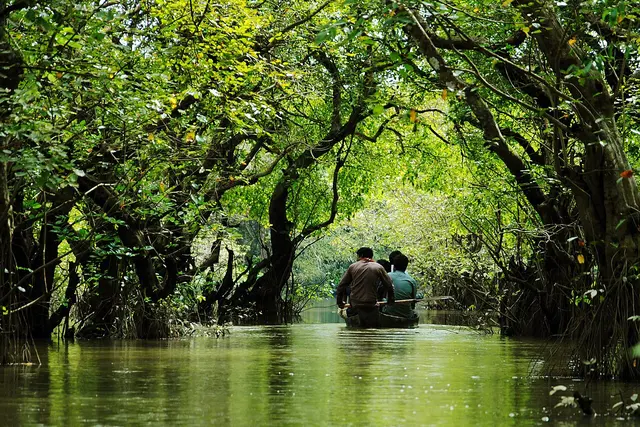
In the monsoon, Tanguar Haor stops looking like land at all. Fields, paths and village edges vanish under one vast sheet of water. Swamp trees stand knee-deep in it, and the blue wall of the Meghalaya hills rises along the northern horizon. Spending a night on a wooden houseboat here, with rain on the roof, fish curry for dinner and village lights scattered across the water, has become one of the defining Bangladesh travel experiences.
Tanguar Haor is also a fragile, internationally protected wetland, and in 2025 and 2026 the authorities had to step in because of noisy, crowded houseboat tourism. This guide covers how to visit well: the current rules, how to get there, monsoon versus winter, what to see nearby, what it costs and how to travel responsibly.
Rules update (2026): In June 2025, the Sunamganj district administration barred houseboats from the watchtower area and nearby core zones. In August 2026 it issued a 13-point directive. Every houseboat and tourist vessel must be registered with the district administration. Engine-driven boats are barred from the designated Ecologically Critical Area zones. Tourist vessels may carry visitors through Matian Haor and the Baulai river to Tekerghat. Loud music, microphones, parties and single-use plastic are banned. Boats must also carry septic tanks, water filters, bins and safety equipment. Book only with registered operators, and expect routes to differ from older trip reports and videos.
Tanguar Haor at a glance
| Location | Tahirpur and Dharmapasha upazilas, Sunamganj district, Sylhet division |
| Status | Ramsar wetland of international importance (designated 10 July 2000, about 9,500 ha); declared an Ecologically Critical Area in 1999 |
| Known for | Houseboat stays, swamp forest, winter waterbirds, views of the Meghalaya hills |
| From Dhaka | Bus ~6 h to Sunamganj, then ~1.5 h to Tahirpur and onwards by boat |
| Best time | Jun–Sep for water and houseboats; Dec–Feb for birds |
| Typical trip | 2 days / 1 night on a houseboat |
| Budget | About ৳5,000–10,000 per person for 2 days (approximate, shared houseboat) |
What makes Tanguar Haor special
A haor is a bowl-shaped floodplain wetland, typical of north-eastern Bangladesh. In the monsoon, rain and water from the hills fill the whole basin. In winter, it shrinks back into dozens of separate beels (lakes) linked by channels, with fields and grazing land in between. Tanguar Haor is one of the largest and best preserved of these. The Ramsar Convention describes it as Bangladesh's most important freshwater wetland.
Around 46 villages live in and around the haor, and their lives follow the water. Fishing and boats rule the monsoon, and farming takes over in the dry season. The haor is one of the country's richest breeding grounds for freshwater fish, with at least 135 recorded species. Its stands of hijol and koroch trees are the swamp forest you see in photos.
For birds, it is exceptional. More than 200 bird species have been recorded, including many migratory ducks and waders. In winter, tens of thousands of waterfowl gather on its beels, and the globally threatened Pallas's fish eagle breeds here.
How to get to Tanguar Haor from Dhaka
Step 1: Dhaka to Sunamganj
- Bus (most common): buses run from Dhaka, mainly from the Sayedabad and Mohakhali areas, to Sunamganj. The trip takes about 6 hours. A night bus gets you there in the morning.
- Via Sylhet: you can take a train or flight to Sylhet and then go by road to Sunamganj, which takes roughly 2 hours. This works if you are combining the trip with Sylhet. See our Sylhet guide.
Step 2: Sunamganj to Tahirpur
From Sunamganj town, go by leguna, CNG or reserved motorbike to Tahirpur. The trip takes about 1.5 hours on a road that can be rough in places. Most houseboats and hired boats start from the Tahirpur ghat. Your operator will confirm the exact boarding point, which can change with the water level.
Step 3: On the water
On a houseboat, the crew handles the route within what the 2026 rules allow. If you hire a regular engine boat for a day trip, agree on the route, the stops and the return time with the boatman, and ask which areas are currently off-limits.
Monsoon or winter? Choosing your season
| Season | Months | What to expect |
|---|---|---|
| Monsoon (বর্ষা) | Jun–Aug | The haor at its fullest, like an inland sea. This is the houseboat season and the time for swamp-forest views. Expect heavy rain, storms and lightning risk. |
| Autumn (শরৎ) | Aug–Oct | Still plenty of water, more sunshine and calmer weather. This is a sweet spot for houseboats. |
| Late autumn (হেমন্ত) | Oct–Dec | Water recedes, beels separate and the first migratory birds arrive. Boats reach fewer places. |
| Winter (শীত) | Dec–Feb | Birdwatching season. Mornings are misty and golden. Most of the haor is fields and beels, so plan small-boat trips rather than houseboats. |
| Spring (বসন্ত) | Feb–Mar | Shimul Bagan blooms red (usually in February). It is dry and dusty, and haor trips are limited. |
Our take: For the classic houseboat experience, go from late June to September. For birds, go from December to February, with a local guide who knows the current access rules. If you want both birds and colour, February adds Shimul Bagan.


Where to stay: houseboats and alternatives
We do not name operators in this guide. These are the types of stays:
- Houseboats: wooden boats with shared or private cabins, a deck for lounging, and a crew that cooks. Standards range from simple boats with shared bathrooms to premium boats with attached bathrooms. Under the 2026 rules, boats must be registered, no longer than 100 ft, and fitted with septic tanks, water filters, bins, life jackets, lifebuoys and fire extinguishers. Ask your operator to confirm all of this.
- Hotels in Sunamganj town: simple to mid-range options if you prefer to do day trips by boat and sleep on land.
- Basic guesthouses in Tahirpur and around Tekerghat: limited and simple, but useful in the dry season.
Tips: ask for the boat's registration status, the cabin layout, the number of guests and the bathroom arrangements. A smaller group makes for a quieter trip and less impact on the haor.
Things to do in and around Tanguar Haor
Spend a night on a houseboat
The heart of the trip is slow time on the water: sunrise from the deck, a monsoon storm rolling in from the hills, fishermen setting nets at dawn, and dinner with fresh haor fish. Under the 2026 rules there is no loudspeaker music. That is a gift, because the haor's real soundtrack is rain, frogs and birds.
See the swamp forest, within the rules
The flooded hijol and koroch groves near the old watchtower are the famous photo spot. Since June 2025, houseboats have been barred from this area. In 2026 the protected zones are closed to engine boats. Ask your operator whether small, non-motorised local boats are currently allowed into any part of the swamp forest. Do not push for access that the rules forbid.
Birdwatching in winter
From December to February, go out at dawn by small boat with a local guide. Keep your distance, keep your voice low, and never chase flocks or try to make birds fly for photos. Binoculars matter more than a big lens.

Niladri Lake (Tekerghat)
At Tekerghat, at the edge of the haor, an old limestone quarry that once supplied the Chhatak cement factory has flooded to form Niladri Lake. Its official name is Shahid Siraj Lake, after Sirajul Islam, a freedom fighter killed in 1971, whose grave is nearby. It has green-blue water, grassy hills and the Meghalaya ridges right behind. Small boats offer short rides. The lake is very deep, so do not swim unless you are a strong swimmer, and stay near the shore. Tekerghat is next to the border, so stay in the tourist area.

Jadukata river, Barikka Tila and Shimul Bagan
West of Tekerghat, the Jadukata river flows in from India over sand and stones. Above it, Barikka Tila (also called Barek Tila) gives sweeping views over the river towards the hills. Nearby, at Manigaon in Tahirpur, is Shimul Bagan, a garden of about 3,000 shimul (red silk-cotton) trees on around 100 bigha of land, planted by a local union chairman. It blooms bright red in Falgun, usually February, and draws large crowds then. Outside the bloom, it is a quiet grove. Many houseboat trips include a stop at Tekerghat, and local motorbikes link these spots on land in the dry season.

Food to try
- Haor fish: freshly caught fish curries and fries. These are the centre of every houseboat menu.
- Duck: haor ducks raised on the wetlands, cooked as a rich curry. This is a local favourite.
- Simple Bengali meals: rice, dal, vegetables and bhorta, cooked by the boat crew.
- Seasonal extras: in winter, pitha (rice cakes) at village stalls.
On a houseboat, meals are usually included. Tell the operator about dietary needs in advance, because there is no shop in the middle of the haor.
Sample 2-day Tanguar Haor itinerary (from Dhaka)
Night 0: Night bus from Dhaka to Sunamganj.
Day 1: Onto the water.
- Arrive in Sunamganj in the morning, have breakfast, and travel to Tahirpur.
- Board the houseboat and cruise through the permitted route towards Tekerghat, with lunch on board.
- In the afternoon, visit Niladri Lake. Watch the sunset over the haor.
- Spend a quiet night on the boat.
Day 2: Dawn and the hills.
- Watch the sunrise from the deck, then take a short boat ride where permitted.
- Visit Barikka Tila and the Jadukata, and Shimul Bagan in season.
- Return to Tahirpur, then Sunamganj, and take an evening bus to Dhaka.
With more time: add Sylhet's tea gardens, Jaflong or Ratargul. See Jaflong and Ratargul.
Estimated budget (per person, 2 days)
These figures are approximate and assume a group sharing a houseboat. Prices change by season, boat standard and cabin type. Verify them before you book.
| Item | What drives the cost | Notes |
|---|---|---|
| Dhaka ⇄ Sunamganj bus | AC or non-AC | Book ahead for weekends |
| Sunamganj ⇄ Tahirpur | CNG, leguna or bike | Often arranged by the operator |
| Houseboat (1 night, meals) | Boat standard, cabin type, group size | Usually the biggest cost |
| Local boats, bikes and entry | Small amounts | Niladri boat rides, Barikka Tila |
| Total (typical) | ≈ ৳5,000 – ৳10,000 | Shared houseboat, 2 days |
Premium boats, private cabins and holiday weekends can push the total well above this range.
Safety and rules
- Book only registered boats. Under the August 2026 directive, unregistered houseboats and tourist vessels may not operate.
- Life jackets on, always. The haor is deep in the monsoon. Boats should carry enough life jackets and lifebuoys, so check before you leave.
- Lightning and storms: the open haor is dangerous during thunderstorms, especially from April to June and in the monsoon. Go inside the cabin, keep away from metal masts, and follow the crew. The directive requires tourist movement to stop in severe weather.
- No swimming at night or in storms, and only near the boat, with a life jacket, in calm conditions.
- Border areas: Tekerghat and nearby spots are close to the Indian border. Stay in tourist areas and follow BGB instructions.
- Carry ID. Keep your NID or passport with you.
Travel responsibly on the haor
Tanguar Haor's problems came from tourism, and the fix depends on tourists too:
- Keep it quiet. No speakers, microphones or parties. These are now banned anyway.
- Zero plastic. Single-use plastic is banned. Bring a refillable bottle and take all your waste back to land.
- Stay out of protected zones, and do not ask the crew to break the rules for a photo.
- Do not disturb wildlife. Do not chase birds, use loud drones over flocks, or break branches in the swamp forest.
- Support local people. Hire local boatmen and guides, buy from village stalls, and ask before photographing people and homes.
- Mind the fish. Do not buy undersized or protected fish, and do not use soap or detergent in the water.
Practical tips
- Pack light and soft: a backpack is easier on a boat than a suitcase.
- Bring: a rain jacket, quick-dry clothes, sandals, sunscreen, a power bank, a torch, mosquito repellent and any medicines you need.
- Network: mobile coverage on the haor is patchy and varies by operator.
- Cash: withdraw in Sunamganj. There are no ATMs on the water.
- Motion and space: houseboats are cosy, not spacious. Light sleepers should bring earplugs.
Travel with a group
BanglaTrips runs small group houseboat trips with registered operators, and our trips follow the 2026 rules. See upcoming departures on our Tanguar Haor page.
Frequently asked questions
Are houseboats allowed in 2026? Yes, if they are registered, and only outside the protected zones. Music, microphones, parties and single-use plastic are banned.
How do I get there from Dhaka? Take a bus to Sunamganj (about 6 h), then go to Tahirpur (about 1.5 h) and board a boat.
When should I go? June to September for houseboats, or December to February for birds.
How much does it cost? Roughly ৳5,000–10,000 per person for 2 days on a shared houseboat (approximate).
Can I swim? Only if you are confident, with a life jacket, in calm water. Never at night or in storms.
Is it near the border? Yes. Stay in tourist areas and follow BGB instructions.
Last updated: October 2026
Frequently asked questions
Are houseboats allowed in Tanguar Haor in 2026?
Yes, but under stricter rules. In August 2026 the Sunamganj district administration issued a 13-point directive. Houseboats must be registered, engine boats are barred from the designated Ecologically Critical Area zones, and tourist vessels may run through Matian Haor and the Baulai river to Tekerghat. Loud music, microphones, parties and single-use plastic are banned. Book only with a registered operator.
How do I get to Tanguar Haor from Dhaka?
Take a bus from Dhaka to Sunamganj (about 6 hours). Then go by CNG, leguna or motorbike to Tahirpur (about 1.5 hours), where most houseboats and boats start. You can also take a train or flight to Sylhet and continue by road to Sunamganj.
When is the best time to visit Tanguar Haor?
For the classic sea-like haor and houseboat trips, go from June to September, when the water is high. For migratory birds, go from December to February, when the water recedes. In February you can combine birds with the Shimul Bagan bloom.
How much does a Tanguar Haor houseboat trip cost?
A 2-day houseboat trip from Dhaka costs roughly ৳5,000–10,000 per person in a shared group, depending on the boat's standard and cabin type. Premium boats cost more. These figures are approximate, so verify them before you book.
Can I swim in Tanguar Haor or Niladri Lake?
Only if you are a confident swimmer, and only with a life jacket, in calm water and with the boat crew's agreement. The haor is deep in the monsoon, and Niladri is a deep former quarry. Never swim in storms or at night, and keep children in life jackets at all times.
Is Tanguar Haor near the Indian border?
Yes. The haor and Tekerghat lie at the foot of the Meghalaya hills, close to the border. Stay in tourist areas, keep away from the zero line and follow instructions from BGB personnel.
Sources
Facts were checked against these sources when the guide was written. Conditions change, so confirm before you travel.
- Tanguar Haor, Ramsar Site no. 1031 (Ramsar Sites Information Service)rsis.ramsar.org
- 13-point directive issued to protect Tanguar Haor (Prothom Alo English, 3 Aug 2026)en.prothomalo.com
- Tanguar Haor: No houseboats to be allowed in specific areas (The Daily Star, 23 Jun 2025)thedailystar.net
- Ban on Tanguar Haor houseboats: Brilliant fix or overkill move? (The Daily Star, 24 Jun 2025)thedailystar.net
- Tanguar Haor open to tourists, houseboats only barred near watchtower (Dhaka Tribune, 23 Jun 2025)dhakatribune.com
- Tanguar Haor (Wikipedia)en.wikipedia.org
- Visit Niladri Lake, Sunamganj (UNB)unb.com.bd
- Shimul Garden (Wikipedia)en.wikipedia.org
- Tanguar Haor: A magical place worth revisiting (The Daily Star)thedailystar.net
- BanglaTrips destination fact sheet (internal, checked facts: design-previews/BRIEF-B.md)banglatrips.com