Bangladesh Six Seasons Travel Calendar: Where to Go Month by Month, Festivals and What to Avoid
Bangladesh has six seasons, not four, and each one changes where you should go. This month-by-month calendar shows the best destinations, festivals, weather and closures for every season.

Most of the world counts four seasons. Bangladesh counts six (ছয় ঋতু), each made of two Bangla months: Grishmo (summer), Borsha (monsoon), Sharat (autumn), Hemanta (late autumn), Sheet (winter) and Boshonto (spring). They are not just poetry. Each season really does change the country: rivers rise and fall by metres, haors turn from grassland into inland seas, clouds settle on the hills, and the coast swings between calm and cyclone.
That means the right destination depends on the month. This calendar walks through the six seasons in order, starting with the Bengali New Year, and tells you where to go, what is happening, what the weather is like and what to avoid.
The six seasons at a glance
Bangladesh uses a revised Bangla calendar with fixed Gregorian dates: the first six months have 31 days, and Pohela Boishakh is always 14 April. Dates below are for this calendar.
| Season | Bangla months | Approximate dates | Weather | Go to |
|---|---|---|---|---|
| Grishmo (গ্রীষ্ম, summer) | Boishakh, Joishtho | 14 Apr – 14 Jun | Hot and humid; afternoon storms | Rajshahi for mangoes, tea gardens, Kaptai Lake |
| Borsha (বর্ষা, monsoon) | Asharh, Srabon | 15 Jun – 15 Aug | Heavy rain, full rivers | Ratargul, Tanguar Haor, Bichanakandi, waterfalls, floating guava market |
| Sharat (শরৎ, autumn) | Bhadro, Ashwin | 16 Aug – 16 Oct | Warm; blue skies between showers | Sajek clouds, Bandarban waterfalls, kash fields, Lalakhal |
| Hemanta (হেমন্ত, late autumn) | Kartik, Agrahayan | 17 Oct – 15 Dec | Dry, clear, pleasant | Tetulia, Sajek, Paharpur and the northern heritage sites |
| Sheet (শীত, winter) | Poush, Magh | 16 Dec – 13 Feb | Cool and dry; fog in the north | Cox's Bazar, Saint Martin's, Sundarbans, Kuakata, Bandarban treks, Old Dhaka |
| Boshonto (বসন্ত, spring) | Falgun, Chaitra | 14 Feb – 13 Apr | Warm days, flowers, rising heat | Sreemangal, Rangamati, Sonargaon, Dhaka's festivals |
Weather varies from year to year. Always check the Bangladesh Meteorological Department forecast and any travel restrictions before you go.
1. Grishmo (summer): mid-April to mid-June
Months: Boishakh and Joishtho.
Weather: The hottest time of the year. Banglapedia notes that April is generally the hottest month, and temperatures in the west, around Rajshahi and Kushtia, can pass 40°C. Sudden, violent afternoon thunderstorms, the kalbaishakhi (nor'westers), sweep in from the north-west during the pre-monsoon months. The Bay of Bengal also has a cyclone season around April–May.
Festivals:
- Pohela Boishakh (14 April): the Bengali New Year and the country's biggest secular festival. In Dhaka, the day starts with songs at Ramna Batamul and the colourful procession from the Faculty of Fine Arts (Charukala) at Dhaka University, inscribed by UNESCO in 2016 as Mangal Shobhajatra. Its official name has changed in recent years, but the masks, the crowds and the red-and-white clothes remain. Boishakhi fairs, panta-ilish and new account books (haalkhata) appear across the country.
- Mango season: from around late May into July, Rajshahi, Chapainawabganj and nearby districts fill with mangoes. Dinajpur's litchis come around May–June.
Where to go:
- Rajshahi for mangoes, with a visit to the Puthia temples early in the morning.
- Tea gardens in Sreemangal and Lawachara, green after the first rains.
- Kaptai Lake in Rangamati, for boat trips while the water starts to rise.
What to avoid: midday sightseeing in the heat; the coast and islands during cyclone warnings. Saint Martin's Island is closed to tourists in this season under current rules.
2. Borsha (monsoon): mid-June to mid-August
Months: Asharh and Srabon.
Weather: The southwest monsoon brings most of the year's rain. Rivers swell, the haors of the north-east become vast lakes, and the land turns intensely green. Rain often comes in heavy bursts with dry spells between.
Festivals and seasonal events:
- Rath Yatra in Asharh (date follows the lunar calendar), with one of the best-known chariot festivals at Dhamrai near Dhaka.
- Ilish (hilsa) season: the national fish is at its best in the monsoon months. Watch for government fishing bans in some rivers at certain times.
Where to go:
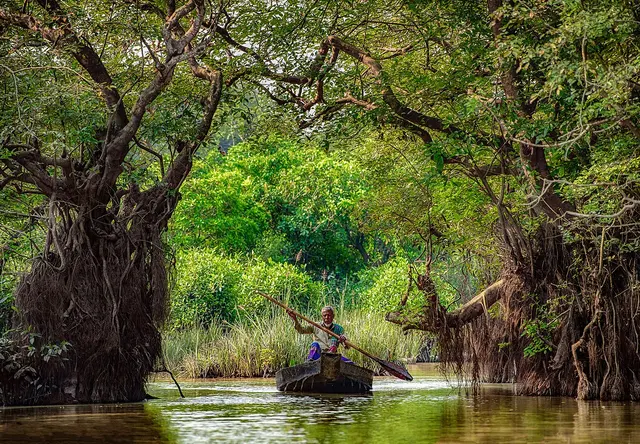
- Ratargul, the freshwater swamp forest near Sylhet, explored by small boat while the trees stand in water.
- Tanguar Haor on a houseboat, when the wetland is a sea of water under the Meghalaya hills.
- Bichanakandi and Lalakhal and Jaflong, where clear streams run down from the hills. See our Sylhet travel guide.
- Waterfalls in Bandarban, such as Nafakhum, which are at full flow (only with local guides and when routes are open).
- The floating guava market at Bhimruli and nearby canals in Jhalokathi and Pirojpur, busiest around July–August.

What to avoid:
- The Sundarbans are closed to tourists from 1 June to 31 August every year for the breeding season. See our Sundarbans tour guide.
- Flash floods in Sylhet and Sunamganj, and landslides in the Chittagong Hill Tracts after heavy rain. Follow local advice and do not swim in fast rivers.
- Rough seas: beaches are not safe for swimming in the monsoon. Obey the flags and lifeguards in Cox's Bazar.

3. Sharat (autumn): mid-August to mid-October
Months: Bhadro and Ashwin.
Weather: Still warm and humid, with showers, but bright blue skies and white clouds return between the rains. The monsoon is withdrawing, though late depressions can still bring heavy rain.
Festivals:
- Durga Puja, the biggest Hindu festival in Bangladesh, usually falls in September or October (the date follows the lunar calendar). Puja pandals appear across the country; Old Dhaka's Shankhari Bazar and Dhakeshwari Temple are especially lively.
- Kash flowers: the white feathery kash phool that blooms on riverbanks and chars is the symbol of Sharat in Bengali poetry and photography.
Where to go:
- Sajek Valley for its famous sea of clouds at dawn. See our Sajek travel guide.
- Bandarban for waterfalls still in good flow and green hills.
- Lalakhal's turquoise water near Sylhet.
- Kash fields along big rivers like the Padma and Jamuna, often easy day trips from district towns.
- The Sundarbans reopen on 1 September, green and lush, though hot.

What to avoid: slippery hill trails after heavy rain; long road trips around Durga Puja holidays without advance tickets.
4. Hemanta (late autumn): mid-October to mid-December
Months: Kartik and Agrahayan.
Weather: One of the best seasons to travel. Rain fades, the air clears, mornings turn cool and dew settles on the fields. It is harvest season for aman rice.
Festivals:
- Nobanno: the traditional "new rice" harvest festival, linked to the start of Agrahayan (around mid-November), with new-rice pitha and payesh in villages.
- Lalon's death anniversary in Kushtia, around 1 Kartik (mid-October), draws bauls and followers to Cheuriya. Check dates locally.
- Victory Day (16 December) comes right at the start of winter, with celebrations across the country.
Where to go:
- Tetulia in Panchagarh, where on clear days in October–November you may see the snowy Kanchenjunga range on the horizon.
- Sajek, now cooler, clearer and still beautiful.
- Paharpur and the northern heritage sites. See our northern heritage trail.
- Saint Martin's Island: under the 2025–26 rules, the season opened on 1 November with day trips only in November. Rules for 2026–27 were under review in October 2026, so check the latest notice. See our Saint Martin's guide.

What to avoid: October–November is also a cyclone season in the Bay of Bengal. Sea and island trips are cancelled when warning signals go up, so build in flexibility.
5. Sheet (winter): mid-December to mid-February
Months: Poush and Magh.
Weather: Cool and dry, with very little rain. January is the coldest month. In the north-west and north-east, cold waves and dense fog are common, especially in the early morning.
Festivals:
- Shakrain (Poush Sankranti) in mid-January, when Old Dhaka's rooftops fill with kites, music and fireworks in the evening.
- Pitha season: bhapa, chitoi, patishapta and many more winter rice cakes, sold at roadside stalls and pitha fairs.
- Winter fairs and cultural events across the country.
Where to go: this is peak season for most of Bangladesh.
- Cox's Bazar and the Marine Drive, with calm seas. See our Cox's Bazar guide.
- Saint Martin's Island (overnight stays were allowed in December–January under the 2025–26 rules; check the latest).
- The Sundarbans by boat, the calmest and most comfortable time.
- Kuakata for sunrise and sunset over the sea.
- Bandarban treks to Boga Lake and Keokradong, on dry trails.
- Tanguar Haor for migratory birds (December–February), a very different place from the monsoon.
- Old Dhaka on foot in cool weather. See our Old Dhaka food and heritage walk.
What to avoid: dawn road travel in thick fog; under-packing for the north, where nights can be surprisingly cold. Book early: hotels, buses and boats fill up on weekends and during the December holidays, and prices are higher.
6. Boshonto (spring): mid-February to mid-April
Months: Falgun and Chaitra.
Weather: Warm days and cool nights in February, flowering trees such as shimul and palash, then steadily rising heat through March. Late in the season, the first kalbaishakhi storms appear.
Festivals:
- Pohela Falgun (14 February): the first day of spring, with yellow and orange clothes, flowers and music, especially around Dhaka University.
- Amar Ekushey (21 February): International Mother Language Day, honouring the 1952 Language Movement. People walk barefoot to the Shaheed Minar at dawn with flowers. The month-long Ekushey Book Fair runs through February in Dhaka.
- Independence Day (26 March).
- Dol Purnima (Holi), the festival of colours, at the full moon of Falgun.
- Chaitra Sankranti on the last day of the year, leading into Pohela Boishakh.
Where to go:
- Sreemangal and Lawachara, with tea gardens and the rainforest before the heat.
- Rangamati and Kaptai Lake.
- Sonargaon and Panam Nagar as a day trip from Dhaka. See our Sonargaon day trip guide.
- Dhaka itself, for the festivals of February and March.
What to avoid: late March can already be hot; plan outdoor sightseeing for mornings and evenings.
Festivals that move: Eid and other lunar dates
Eid-ul-Fitr and Eid-ul-Adha follow the Islamic lunar calendar and move about 11 days earlier every year. Exact dates depend on moon sighting. Around both Eids:
- millions travel home, so buses, trains and launches sell out days in advance;
- Dhaka empties, which makes it unusually quiet for sightseeing (many shops and restaurants close);
- popular destinations like Cox's Bazar, Sylhet and Sajek fill up in the days after Eid.
Durga Puja, Rath Yatra, Dol Purnima and Buddha Purnima also follow lunar calendars. Always check the current year's dates.
Quick month-by-month picks
| Month | Top picks |
|---|---|
| January | Sundarbans, Cox's Bazar, Saint Martin's (if open), Tanguar Haor birds, Shakrain in Old Dhaka |
| February | Pohela Falgun, Ekushey, book fair, Sreemangal, Kuakata |
| March | Rangamati, Sonargaon, Sreemangal; mornings only by month's end |
| April | Pohela Boishakh (14 April) in Dhaka; tea gardens |
| May | Early mangoes and litchis; avoid the coast in cyclone warnings |
| June | Rajshahi mangoes; first rains; Sundarbans closed |
| July | Ratargul, Tanguar Haor houseboats, floating guava market |
| August | Bichanakandi, Jaflong, waterfalls, floating guava market; Sundarbans still closed |
| September | Sajek clouds, kash flowers, Sundarbans reopen |
| October | Durga Puja (most years), Sajek, Tetulia begins |
| November | Tetulia's mountain views, northern heritage trail, Saint Martin's opens (per current rules) |
| December | Cox's Bazar, Sundarbans, Bandarban treks, Victory Day |
Practical tips for seasonal travel
- Book early for winter and Eid. These are the busiest travel times of the year.
- Pack for the season. Rain gear and quick-dry clothes for Borsha; layers for Sheet, especially in the north and the hills.
- Check closures and rules. Sundarbans, Saint Martin's, hill tract permits and haor boat rules change. Read the latest notices, or let a licensed operator handle them.
- Respect festivals. Dress modestly, ask before photographing people at religious events and be patient with crowds.
- Stay flexible. Weather warnings, fog and floods can delay transport. Leave a buffer day on longer trips.
Travel with a group
Every season in Bangladesh has its moment, and our group departures follow the calendar: cloud-season trips to Sajek, monsoon haor houseboats, winter Sundarbans cruises and cool-season heritage trails. Start with a season above, open the destination guide, and check upcoming departures there.
Frequently asked questions
What are the six seasons? Grishmo, Borsha, Sharat, Hemanta, Sheet and Boshonto, each two Bangla months long.
What is the best time to visit? November to February for most trips; the monsoon for haors, swamp forests and waterfalls.
When is Pohela Boishakh? 14 April every year in Bangladesh.
What is closed when? The Sundarbans close from 1 June to 31 August. Saint Martin's is open only for a short winter window under current rules.
Is the monsoon bad for travel? No, if you choose water destinations and check flood and cyclone warnings.
Should I avoid Eid? Plan around it: transport sells out, and tourist spots fill up right after.
Last updated: October 2026
Frequently asked questions
What are the six seasons of Bangladesh?
Grishmo (summer, Boishakh–Joishtho, mid-April to mid-June), Borsha (monsoon, Asharh–Srabon, mid-June to mid-August), Sharat (autumn, Bhadro–Ashwin, mid-August to mid-October), Hemanta (late autumn, Kartik–Agrahayan, mid-October to mid-December), Sheet (winter, Poush–Magh, mid-December to mid-February) and Boshonto (spring, Falgun–Chaitra, mid-February to mid-April).
What is the best time to visit Bangladesh?
For most travellers, November to February: it is cool and dry, and the beaches, the Sundarbans and Saint Martin's are open. But each season has its own highlights. The monsoon is the best time for Ratargul, Tanguar Haor and waterfalls, and Sharat is famous for Sajek's clouds and kash flowers.
When is Pohela Boishakh?
In Bangladesh, Pohela Boishakh, the Bengali New Year, falls on 14 April every year under the revised Bangla calendar. Dhaka's Ramna Batamul and the Fine Arts procession are the best-known celebrations.
Which places are closed in certain seasons?
The Sundarbans are closed to tourists from 1 June to 31 August every year. Saint Martin's Island is open to tourists only for a short winter window under current government rules, which are under review. Hill and haor trips can be suspended during floods, landslides or security restrictions.
Is the monsoon a bad time to travel in Bangladesh?
Not at all, if you choose the right places. Swamp forests, haors, rivers and waterfalls are at their best in the rains. Avoid the coast during cyclone warnings, check for flash floods in Sylhet and landslide risk in the hills, and expect delays.
When are Eid holidays, and should I avoid them?
Eid-ul-Fitr and Eid-ul-Adha follow the lunar Islamic calendar and move about 11 days earlier each year. Around Eid, millions travel home, so buses, trains and launches sell out and tourist spots fill up right after. Book early or plan around them.
Sources
Facts were checked against these sources when the guide was written. Conditions change, so confirm before you travel.
- Climate (Banglapedia)en.banglapedia.org
- Season (Banglapedia)en.banglapedia.org
- Bangabda (Banglapedia)en.banglapedia.org
- Pahela Falgun, Valentine's Day: '2 days' in 24 hours (The Daily Star, revised Bangla calendar)thedailystar.net
- Mangal Shobhajatra on Pahela Baishakh (UNESCO Intangible Cultural Heritage)ich.unesco.org
- Not changing name of Mangal Shobhajatra, rather going back to old name (Prothom Alo English)en.prothomalo.com
- Govt imposes 3-month ban on visitors' entry into the Sundarbans from 1 June (Prothom Alo English)en.prothomalo.com
- Tourist travel to Saint Martin closed for 9 months (Dhaka Tribune)dhakatribune.com