Dhaka to Barishal by Launch and the Floating Guava Market: Cabins, Safety, Bhimruli and Durga Sagar
Fall asleep on the Buriganga and wake up on the Kirtankhola, then spend the morning among boats piled high with green guavas. This is how to plan Bangladesh's classic river trip.

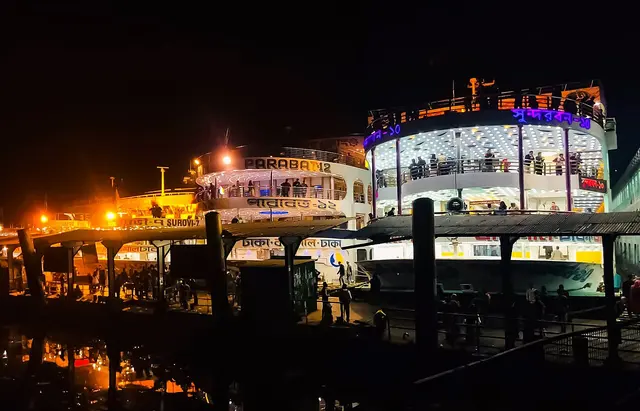
Some of the best journeys in Bangladesh happen on water. Every evening, multi-deck passenger launches pull away from Sadarghat in Old Dhaka, their lights strung along the decks, and sail through the night to the river towns of the south. By dawn you are on the Kirtankhola at Barishal, often called the "Venice of the East", a region where rivers and canals were the roads for centuries.
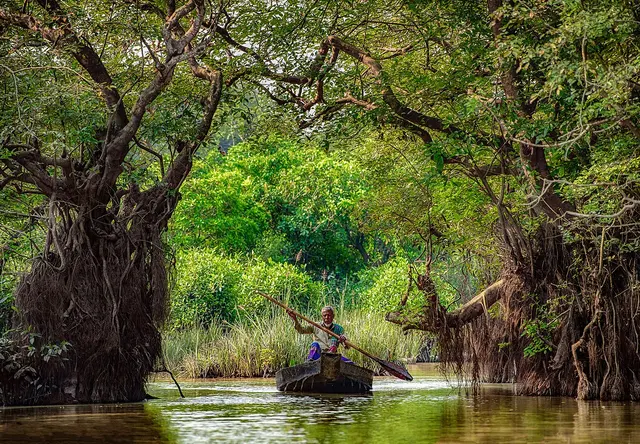
In July and August, that journey has a sweet reward. In the canals where Barishal, Jhalokathi and Pirojpur districts meet, farmers row small boats laden with green guavas straight from their orchards to floating markets, the best known of which is Bhimruli. Traders buy from boat to boat, the canal fills with colour, and visitors drift through it all in hired boats.
This guide covers the overnight launch (cabins, tickets and safety), the floating guava market (season, timing and how to reach it), Durga Sagar and other sights around Barishal, food, a two-day plan and costs.
Barishal and the floating market at a glance
| Where | Barishal city, and the canals of Jhalokathi Sadar, Banaripara (Barishal) and Nesarabad/Swarupkathi (Pirojpur) |
| Highlights | Overnight launch from Sadarghat, Bhimruli floating guava market, Atghar–Kuriana markets, Durga Sagar, canal villages |
| From Dhaka | Overnight launch ~7–8 h; bus via the Padma Bridge ~4–5 h; flights to Barishal |
| Market season | July – August (sometimes into early September) |
| Typical trip | 2 days, 1–2 nights on the launch |
| Budget | ≈ ৳3,500–6,000 per person for 2 days, shared (approximate) |
The Dhaka–Barishal launch
What it is like
The Dhaka–Barishal launches are big, multi-deck river ships carrying hundreds of passengers. The lower decks are open floor space where people spread out mats. The upper decks have rows of cabins along corridors, with a common front deck where everyone gathers to watch the river. Leaving Sadarghat at dusk, you pass the busy Buriganga with its ferries and country boats, then the city lights fade and the launch heads out onto the wide Meghna. Many people stay up on deck for the breeze, tea from the onboard canteen and the lights of other launches passing in the dark.
Launches arrive at Barishal river port on the Kirtankhola before or around dawn. Some passengers rest on board for a while before going ashore. Ask the crew what is allowed on your vessel.

Timing and how long it takes
Launches for Barishal leave Sadarghat in the evening and the trip takes roughly 7–8 hours. Exact departure times change by operator and season. In winter, dense fog can delay or suspend sailings, as happened on southern routes in December 2025. Return launches leave Barishal in the evening and reach Dhaka early the next morning.
Since the Padma Bridge opened in June 2022, passenger numbers on southern launch routes have fallen sharply, and some routes have closed. Barishal is still one of the main routes, and a March 2026 Dhaka Tribune report found that cabins still sell out, especially before Eid. Fewer launches also means fewer choices of departure, so confirm the schedule a few days before you travel.
Cabins and tickets
- Deck: the cheapest option. You bring a mat or sheet and find floor space. It is crowded, open to the weather and not ideal for luggage or for first-timers.
- Single cabin: a narrow room with a single bed, a fan and usually a shared bathroom down the corridor.
- Double cabin: two beds or one larger bed, the most popular choice for couples and friends. Some have an attached bathroom.
- Family and VIP cabins: larger rooms, often with an attached bathroom and air-conditioning, on the bigger launches.
Buy tickets from the operator's counter at Sadarghat or through the operator's official phone line or booking channel. Book cabins several days ahead for Thursday and Friday nights and well ahead before Eid. When you board, check that the cabin number, lock and fan match what you paid for.

Launch safety
River travel in Bangladesh has a mixed safety record. On 24 December 2021 a fire broke out in the engine room of the Barguna-bound launch Abhijan-10 on the Sugandha river near Jhalokathi. A government probe later reported at least 49 deaths. Most launch trips pass without incident, but take these steps every time:
- Choose a large, well-known launch and avoid vessels that look overloaded.
- Avoid peak holiday sailings if you can. Overcrowding before Eid is a known risk.
- Find the life jackets, life buoys, fire extinguishers and exits as soon as you board, and note the stairways from your cabin.
- Don't travel when a storm signal is up. The authorities suspend sailings in bad weather. Follow those decisions.
- Keep valuables on you. Lock your cabin and keep phones and money close, especially at Sadarghat during boarding.
- Children: never let them near the railings or the edges of the lower deck.
Alternatives to the launch
- Bus: buses cross the Padma Bridge and reach Barishal in about 4–5 hours. This is the fastest option for most people.
- Air: domestic flights serve Barishal airport. Check the airlines for current schedules.
Many travellers take the launch one way and the bus the other way: the launch for the experience, the bus to save a night.
The floating guava market
What and where
The guava belt lies in the low, canal-laced country where Jhalokathi Sadar, Banaripara in Barishal and Nesarabad (Swarupkathi) in Pirojpur meet. Thousands of small orchards line the canals, and the farmers bring their harvest by boat. Several floating wholesale points work during the season. The most famous is Bhimruli, on the canals of the Kirtipasha area in Jhalokathi, roughly 15 km from Jhalokathi town. Others include Atghar and Kuriana on the Pirojpur side. News sources disagree on exactly which upazila the market falls in, because it sits so close to the district borders. Your boatman or local guide will know the way.
Local accounts say the area's guava, often called Purna Mandali, has been grown here for around two centuries. During the season you will see narrow boats piled with green fruit, wholesale traders loading larger boats bound for the cities, and floating snack and tea boats serving everyone in between. Besides guavas, you will see amra (hog plum), lemons, bananas and other produce.
When to go
- Season: mainly July and August, sometimes running into early September. A late or very wet monsoon can delay the start.
- Time of day: farmers start picking before dawn, and boats arrive through the morning. Reports differ on the peak hour, so arrive by mid-morning to see the market build up. Fridays tend to bring the biggest tourist crowds.
- Outside the season, the canals are still beautiful and peaceful, but there is no floating market to see.
How to get there
From Barishal city, the two common routes are:
- By road to Banaripara, then by boat. Take a CNG or microbus from Barishal to the Banaripara area and hire a trawler or boat along the canals to Bhimruli. The ride itself is half the fun.
- By road to Jhalokathi, then auto. Go by bus or CNG to Jhalokathi and continue by auto-rickshaw or van to the Bhimruli canal, then hire a small boat on the spot.
At the market, hire a small boat by the hour to move between the trading boats, or a trawler for a group. Agree the price and the route before you board. A Daily Star report in 2025 put small boats at around ৳300 an hour and trawlers higher, but rates change every season, so treat that as a rough guide.

Market etiquette
This is a working market first. Farmers and traders are earning their living, and it can get very busy in peak season.
- Keep your boat out of the way of loaded boats, and don't block the narrow channels.
- Ask before photographing farmers up close, and buy a few guavas. It is cheap and appreciated.
- Keep the noise down. Local operators have complained about loud music from tourist boats.
- Don't throw plastic into the canals.
Around Barishal
Durga Sagar
About 11 km from Barishal city at Madhabpasha in Babuganj upazila, Durga Sagar is one of the largest man-made lakes (dighi) in southern Bangladesh. It was excavated in 1780 under Rani Durgabati, mother of Raja Joy Narayan, and covers roughly 25 hectares. A small wooded island sits in the middle. The tree-lined banks make a pleasant walk, and migratory birds gather here in winter.

In and around the city
- The Kirtankhola riverfront and the river port in the evening, when the Dhaka launches get ready to leave.
- The Oxford Mission Church (Epiphany Church), a large early-20th-century red-brick church in the city.
- The Guthia Mosque complex in Wazirpur, a well-known modern mosque surrounded by gardens and a pond.
- Shapla (water-lily) wetlands in the Satla area of Wazirpur, at their best on monsoon and early-autumn mornings.
Where to stay
- Barishal city: most travellers base themselves here, with hotels and guesthouses in all ranges around the city centre and the river port. It is the most practical base for both the market and Durga Sagar.
- Jhalokathi and Swarupkathi towns: a few simpler hotels, useful for an early start at the market.
- On the launch: if you take the night launch both ways, your cabin is your bed for two nights, and you may not need a hotel at all.
Food to try
- Guavas and amra straight from the boats, often with salt and chilli.
- Ilish (hilsa) from the southern rivers, in season. Barishal is famous for it.
- Gournadi doi and local sweets in Barishal.
- Rice, fish curry and dal from the floating food boats and canal-side eateries at the market.
- Tea and snacks on the launch from the onboard canteen.
Sample 2-day itinerary (July–August)
Night 0: Dhaka to Barishal by launch. Board at Sadarghat in the evening, watch the river from the front deck, then sleep in your cabin.
Day 1: Floating market.
- Arrive in Barishal at dawn and have breakfast near the river port.
- Go by road to Banaripara and take a boat along the canals to Bhimruli.
- Spend the morning at the market and have lunch at the canal-side eateries.
- Return to Barishal in the afternoon. Stay in a hotel, or take the evening launch back for a one-night trip.
Day 2: Durga Sagar and the city.
- Visit Durga Sagar in the morning.
- Optional: the Guthia Mosque and the Satla water-lily wetlands.
- In the evening, take the launch back to Dhaka, or a bus via the Padma Bridge.
With more time: continue south by road to Kuakata for sunrise and sunset on the sea. See our Kuakata travel guide.
Estimated budget (per person)
These are approximate ranges for planning, based on group sharing. Fares are set by the authorities but can rise with fuel prices and before holidays. Verify before you travel.
| Item | Approximate range | Notes |
|---|---|---|
| Launch, deck (one way) | ≈ ৳300 – ৳500 | Crowded; not ideal for first-timers |
| Launch, single cabin (one way) | ≈ ৳800 – ৳1,500 | Higher on bigger, newer launches |
| Launch, double cabin (one way) | ≈ ৳1,800 – ৳2,500 | Per cabin, shared by two |
| Bus via Padma Bridge (one way) | ≈ ৳600 – ৳1,500 | Non-AC to AC |
| Local transport (CNG, auto, microbus) | Shared per vehicle | Agree fares first |
| Boat at the market | Per hour or per trip | Small boat or trawler |
| Hotel in Barishal (per night) | ≈ ৳800 – ৳3,000 | Shared room |
| 2-day trip total | ≈ ৳3,500 – ৳6,000 | Shared, mid-range (approximate) |
Safety and practical rules
- Launch safety first: see the checklist above. Life jackets, exits and no travel in storm signals.
- Boats at the market: small boats are low in the water. Sit still, keep phones in a dry bag and wear a life jacket if one is offered. Ask for one if it isn't.
- Monsoon weather: July–August is the rainy season. Carry a light raincoat or umbrella, and expect delays.
- Sun and heat: the canals are humid even on cloudy days. Drink water and wear a hat.
- Respect the villages: dress modestly, ask before photographing homes and people, and don't walk into orchards without permission.
Practical tips
- Book the launch cabin early, especially for Thursday and Friday nights.
- Carry cash in small notes for boats, autos and fruit.
- Pack light. A small backpack is much easier on launch stairways and small boats.
- Bring a power bank, a light sheet for the cabin, insect repellent, a dry bag and sandals that grip on wet boat floors.
- Check the market's status in recent local news before you go. The season can start late in a wet year.
- On a winter launch, bring warm clothes. The river wind is cold at night, and fog can delay arrival by hours, so don't plan anything urgent for the next morning.
- For the Atghar–Kuriana boat market (where wooden boats themselves are sold), ask locals which days it runs. Older reports name specific weekdays, but the schedule may have changed.
Travel with a group
The floating market is easier with a group: one microbus, one trawler and a guide who knows which canal is busiest that morning. BanglaTrips runs launch and floating market group tours in season. See upcoming departures on our floating guava market page, and for another great water journey read our Sundarbans tour guide.
Frequently asked questions
When is the floating guava market open? Mainly July and August, sometimes into early September.
How long does the launch take? About 7–8 hours overnight from Sadarghat.
Is the launch safe? Mostly, but choose a well-known operator, avoid overcrowded sailings and find the life jackets and exits.
Which cabin should I book? A single or double cabin. Book early for weekends and Eid.
Can I go without the launch? Yes. Buses via the Padma Bridge take about 4–5 hours, and there are flights to Barishal.
How much does it cost? About ৳3,500–6,000 per person for two days, shared (approximate).
Last updated: October 2026
Frequently asked questions
When is the floating guava market open?
The guava season runs mainly in July and August, and sometimes into early September. Trading starts at dawn and goes on through the day, with boats arriving from the orchards all morning. Outside the season you will see the canals and the orchards, but not the crowded market. The start date shifts with the weather, so check recent local news before you book.
How long does the Dhaka–Barishal launch take?
Roughly 7 to 8 hours overnight. Launches leave Sadarghat in the evening and usually reach Barishal before or around dawn. Times vary by vessel, river conditions, fog and the season, so confirm with the operator.
Is it safe to travel by launch?
The big Dhaka–Barishal launches carry many passengers every night, but accidents have happened, including the Abhijan-10 fire near Jhalokathi in December 2021, which a probe later said killed at least 49 people. Choose a well-known operator, avoid overcrowded holiday sailings, find the life jackets and exits when you board, and do not travel when a storm signal is up.
Which cabin should I book?
Single and double cabins are the usual choice for travellers. Larger family and VIP cabins exist on bigger launches. The deck is cheapest but crowded and open. Cabins sell out before Eid and on Thursday nights, so book early through the operator's counter at Sadarghat or their official booking channel.
Can I do the floating market without the launch?
Yes. Since the Padma Bridge opened in 2022, buses reach Barishal in about 4 to 5 hours, and you can fly to Barishal too. Many travellers still choose the launch for at least one direction because the river journey is part of the experience.
How much does the trip cost?
As a rough guide, a 2-day trip from Dhaka costs about ৳3,500–6,000 per person in a group, including a shared launch cabin, local transport, boat hire and food. A private cabin both ways costs more. These are approximate figures, so verify current fares.
Sources
Facts were checked against these sources when the guide was written. Conditions change, so confirm before you travel.
- Cabin demand rises for Eid launch travel despite fuel shortage (Dhaka Tribune, 14 March 2026)dhakatribune.com
- Sadarghat's legacy struggles with the decline in launch service (The Business Standard)tbsnews.net
- 37 die as Jhalakathi launch goes up in flames (The Business Standard)tbsnews.net
- A floating mosaic of guavas, baskets and people (The Daily Star, August 2025)thedailystar.net
- The floating guava markets in Bangladesh (The Financial Express)thefinancialexpress.com.bd
- Durga Sagar (Wikipedia)en.wikipedia.org
- Jhalokati Sadar Upazila (Wikipedia)en.wikipedia.org