Old Dhaka Food and Heritage Walk: Lalbagh Fort, Ahsan Manzil, Star Mosque and the Best Things to Eat
Four centuries of Dhaka packed into a few square kilometres. Here is a walking route through Old Dhaka's forts, palaces, mosques and lanes, with what to eat along the way and how to do it comfortably.

Old Dhaka (Puran Dhaka) is where the capital began. Long before the glass towers of Gulshan, this tangle of lanes along the Buriganga River was a Mughal provincial capital, a trading town for Armenians, Greeks and Europeans, and the seat of the Dhaka Nawabs. Today it is noisy, crowded and wonderful: Mughal forts, a pink palace, a mosque covered in porcelain stars, an 18th-century church, conch-shell workshops and some of the most loved food in Bangladesh, all within a few kilometres.
This guide gives you a one-day walking route (with a few rickshaw hops), the history behind each stop, what to eat and when, and practical tips to enjoy Puran Dhaka without being overwhelmed.
Old Dhaka at a glance
| Where | South-western Dhaka, along the north bank of the Buriganga River |
| Highlights | Lalbagh Fort, Star Mosque, Armenian Church, Ahsan Manzil, Sadarghat, Shankhari Bazar |
| Time needed | One full day; add an evening for food |
| Best months | November to February (cool and dry) |
| Getting around | On foot and by cycle-rickshaw. Cars move very slowly in the lanes. |
| Budget | About ৳1,000–2,000 per person for a day, including entry tickets, rickshaws and food (approximate) |
| Famous food | Kacchi biryani, bakarkhani, lassi, faluda, kebabs, Ramadan iftar at Chawkbazar |
A short history of Puran Dhaka
Dhaka became the Mughal capital of Bengal in the early 17th century, and the area between Lalbagh and the river grew into a busy city of markets (bazars), caravanserais (katras) and neighbourhoods (tolas) named after trades and communities. Shankhari Bazar was named after conch-shell workers, Tantibazar after weavers, and Armanitola after the Armenian merchants who settled there.
When the Mughal capital moved to Murshidabad, Dhaka declined for a time. In the 19th century, the Nawab family of Dhaka built Ahsan Manzil on the riverbank, and the old city revived as a centre of trade and culture. Much of what you see today, including the crumbling mansions, the street names and the food traditions, comes from these layers of Mughal, colonial and Nawabi Dhaka.
How to get to Old Dhaka
Old Dhaka is part of the city, so "getting there" means getting through Dhaka traffic.
- Metro rail: The Dhaka Metro Rail (MRT Line 6) is the fastest way to cross the city from the north. Get off at a southern station and take a rickshaw or CNG auto-rickshaw towards Lalbagh or Sadarghat. Check the current line map for the nearest station.
- CNG or ride-hailing car: Fine for reaching the edge of Old Dhaka, for example the Lalbagh or Gulistan side, but expect slow progress once you are in the lanes.
- Rickshaw: The best way to move between sights inside Old Dhaka. Agree the fare before you get in.
Start early. By 8–9 am the lanes are still manageable. By midday traffic is intense.
Opening hours and tickets
Lalbagh Fort is run by the Department of Archaeology, and Ahsan Manzil is a branch of the Bangladesh National Museum. Both charge an entry fee (higher for foreign visitors) and both have a weekly closing day and seasonal hours. Lalbagh Fort is widely reported to close on Sundays and Ahsan Manzil on Thursdays, with shorter hours on Fridays around Jumma prayers. These schedules change and are also affected by public holidays, so check locally or on the official ticketing website before you go. Mosques, the church and the markets do not charge entry, but respect prayer times.
The walking route: stop by stop
The route runs roughly west to east, from Lalbagh to the river and Shankhari Bazar. Total walking distance is a few kilometres. Use rickshaws for the longer hops.
1. Lalbagh Fort (morning)
Start at Lalbagh Fort (Lalbagh Kella), the most famous Mughal monument in Dhaka. Construction began in 1678 under Prince Muhammad Azam, a son of Emperor Aurangzeb, during his short term as viceroy of Bengal. When Azam was recalled, his successor Shaista Khan did not complete it, and after his daughter Bibi Pari died here in 1684, he is said to have considered the fort unlucky. It was never finished.
Inside the walls (around 18 acres) you will find three main buildings:
- Tomb of Bibi Pari: the finest building in the complex, with a central chamber lined with white marble.
- The three-domed mosque, still in use.
- Diwan-i-Aam and hammam: a two-storey audience hall with an attached Mughal bathhouse, now a small museum.
Walk the gardens early, when the light is soft and the grounds are quiet.
2. Dhakeshwari Temple and Chawkbazar (optional hop)
North-east of the fort is Dhakeshwari Temple, regarded as Bangladesh's national temple and an important place of worship for Hindus. Remove your shoes and follow the rules for visitors. Then take a rickshaw towards Chawkbazar, the old Mughal market area, which is busy with wholesale shops. Look out for the ruins of the Bara Katra, a 17th-century Mughal caravanserai, now largely hidden among later buildings.
3. Star Mosque (Tara Masjid), Armanitola
In Armanitola stands one of Dhaka's most photographed buildings. The Star Mosque was built in the first half of the 19th century and is attributed to Mirza Golam Pir. Its fame comes from the decoration: the walls and domes are covered in chini tikri, a mosaic made from broken pieces of china plates, cups and glass, with star motifs everywhere, which give the mosque its name. A later renovation, commonly credited to the merchant Ali Jan Bepari, added much of the tile work you see today.
Visitors are usually welcome outside prayer times. Dress modestly, remove your shoes and ask before photographing people.

4. Armenian Church of the Holy Resurrection
A few minutes' walk away is a surprise: an Armenian church built in 1781, when Armanitola was a busy trading district. Armenian merchants dealt in jute, leather and other goods, and the neighbourhood is named after them. The land was donated by an Armenian, and the walled compound has a bell tower and a graveyard with old Armenian gravestones.
The Armenian community in Dhaka has almost disappeared, but the church is still looked after by a caretaker. Access depends on whether the gate is open, so be polite and flexible, and keep voices low in the graveyard.

5. Lunch break
By now you will be hungry. The area between Nazira Bazar, Bangshal and Chawkbazar is full of biryani and kacchi houses. See the food section below.
6. Ahsan Manzil, the Pink Palace
Walk or take a rickshaw down to the river to Ahsan Manzil, the former palace of the Dhaka Nawabs. The site once belonged to a French trading post. Nawab Abdul Ghani built the present palace between 1859 and 1872 and named it after his son, Khwaja Ahsanullah. A tornado in 1888 and an earthquake in 1897 damaged it, and it was repaired afterwards.
After long restoration, it became a museum under the Bangladesh National Museum in 1992. Inside, restored rooms, furniture, portraits and galleries tell the story of the Nawab family and 19th-century Dhaka. The grand staircase facing the river is the classic photo spot.

7. Sadarghat and a boat on the Buriganga
A short walk east brings you to Sadarghat, the river port of Dhaka. Huge multi-deck launches leave from here for Barishal, Bhola, Patuakhali and other southern towns, mostly in the evening. Around them, dozens of small wooden rowing boats ferry people across the river.
A short boat ride is the best way to see the Old Dhaka riverfront. Agree the fare before you get in, sit low in the boat and keep cameras and phones secure. The terminal area is extremely crowded, so watch your pockets.

8. Shankhari Bazar (late afternoon)
End the day in Shankhari Bazar, one of Old Dhaka's most atmospheric lanes. It is named after the shankhari, the conch-shell craftsmen. Banglapedia notes that the community was brought to Dhaka during the Mughal period. Their best-known product is the white shankha bangle worn by married Hindu women.
The narrow street is lined with tall, thin old houses, small temples and shops selling shell bangles, puja items, kites and drums. Fewer artisans work by hand today, but you can still see a few carving shells. Around Durga Puja and Shakrain (the mid-January kite festival), the area is at its most colourful and crowded.
Just north is Bahadur Shah Park, a small green square with a memorial to the soldiers of the 1857 uprising. It is a good place to rest at the end of the walk.
What to eat in Old Dhaka
Puran Dhaka's food is rich, meaty and generous. Many dishes come from the Mughal and Nawabi kitchens, and many families have run the same shop for generations. We do not list specific restaurants, because quality and prices change. Ask locals which shop is best for each dish today.
| Dish | What it is |
|---|---|
| Kacchi biryani | Raw (kachcha) marinated mutton or beef layered with rice and slow-cooked in a sealed pot. The signature dish of Old Dhaka. |
| Morog polao | Fragrant rice cooked with chicken, a lighter alternative to kacchi |
| Bakarkhani | A crisp, flaky, layered bread baked inside a clay tandoor, eaten with tea. Look for bakeries around Lalbagh and nearby lanes. |
| Lassi and faluda | Thick, sweet yoghurt drinks and layered faluda, perfect after a heavy lunch |
| Borhani | A spicy, minty yoghurt drink served with biryani |
| Kebabs and chaap | Grilled and fried meat, especially popular in the evenings around Nazira Bazar and Bangshal |
| Sweets | Shahi jilapi, sweet curd and many kinds of mishti |

Ramadan: the Chawkbazar iftar market
If you are in Dhaka during Ramadan, do not miss the iftar market at Chawkbazar. Every afternoon before sunset, the area around the Shahi Mosque fills with stalls selling roasts, kebabs, keema parathas, borhani, doi bora and the famous "boro baper polay khay", a heavy mix of chickpeas, minced meat, potatoes, eggs, chira (flattened rice), spices and ghee. Locals say the market dates back to the Mughal period.
It is one of the most crowded places in Dhaka at that hour, so go in a small group, carry small notes and keep your belongings close. Some locals say the market now runs more on reputation than on quality, so taste a little from several stalls rather than buying a lot from one.
Sample one-day itinerary
| Time | Plan |
|---|---|
| 8:00 | Breakfast of tea and bakarkhani. Arrive at Lalbagh Fort when it opens. |
| 10:00 | Rickshaw past Dhakeshwari Temple and Chawkbazar to Armanitola |
| 11:00 | Star Mosque and the Armenian Church |
| 13:00 | Kacchi biryani lunch, then lassi |
| 14:30 | Ahsan Manzil museum (check the closing day) |
| 16:00 | Sadarghat and a short boat ride on the Buriganga |
| 17:00 | Shankhari Bazar and Bahadur Shah Park |
| 18:30 | Evening kebabs and tea, then head home before late-night traffic |
Short on time? Do Lalbagh Fort, Ahsan Manzil and a boat ride at Sadarghat in half a day.
Estimated budget (per person)
Approximate ranges for planning. Prices and fees change, and foreign visitors pay higher entry fees.
| Item | Approximate range |
|---|---|
| Entry tickets (Lalbagh Fort, Ahsan Manzil) | Low for locals, higher for foreigners. Check at the gate. |
| Rickshaws for the day | ≈ ৳200–500 |
| Boat ride at Sadarghat | Small, agree before boarding |
| Food (lunch, snacks, drinks) | ≈ ৳500–1,200 |
| Total | ≈ ৳1,000–2,000 |
Etiquette and safety
- Dress modestly. Cover shoulders and knees, especially at mosques, temples and the church. Women should carry a scarf.
- Shoes off at mosques and temples. Avoid visiting mosques during prayer times.
- Ask before photographing people, especially women and artisans at work.
- Watch your pockets at Sadarghat, Chawkbazar and in crowded lanes.
- Rickshaw fares: agree before you start. Small notes help.
- Food hygiene: eat at busy shops with high turnover, drink bottled or filtered water and go easy on rich food if you are not used to it.
- Heat and rain: carry water, a hat and an umbrella. Lanes can flood after heavy monsoon rain.
Practical tips
- Go with a local friend or a guide if it is your first time. The lanes are confusing, and a local can open doors (sometimes literally, at the Armenian Church).
- Wear comfortable, closed shoes. The streets are uneven and sometimes wet.
- Avoid Fridays around midday if you want to see the mosques. Many sites keep shorter hours then.
- Plan around festivals. Shakrain in January and Durga Puja in autumn are spectacular but very crowded. Pohela Boishakh (14 April) brings festive crowds across Dhaka.
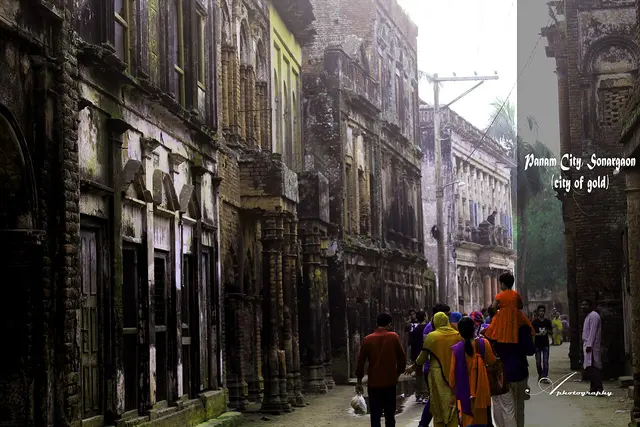
- Combine your walk with a day trip to Sonargaon and Panam Nagar, Bengal's medieval capital, about an hour from Dhaka.
Travel with a group
Old Dhaka is easier and more fun with a small group and a local guide who knows the lanes, the history and the best food shops of the moment. BanglaTrips offers small-group heritage walks in Old Dhaka during the cool season. See details on our Old Dhaka page, and read our six seasons travel calendar to plan the rest of your trip.
Frequently asked questions
How long do I need? One full day for the main sights. Add an evening for food.
When is the best time? November to February. Start early in the morning.
Are the museums open every day? No. Lalbagh Fort is widely reported to close on Sundays and Ahsan Manzil on Thursdays. Check locally.
What should I eat? Kacchi biryani, bakarkhani, lassi, faluda, kebabs and, in Ramadan, Chawkbazar iftar.
Is it safe? Yes, with normal city precautions. Watch your belongings in crowds.
Can I take a boat at Sadarghat? Yes. Small rowing boats cross the Buriganga all day. Agree the fare first.
Last updated: October 2026
Frequently asked questions
How long do I need to see Old Dhaka?
One full day covers the main sights on foot and by rickshaw: Lalbagh Fort, the Armanitola area with the Star Mosque and Armenian Church, Ahsan Manzil, Sadarghat and Shankhari Bazar. Food lovers often come back for a second, evening-only visit.
What is the best time of year for an Old Dhaka walk?
November to February is the most comfortable, with cooler, drier weather. Mornings are best for walking. In the monsoon (roughly June to September) lanes can flood after heavy rain, and April–May is very hot.
Are Lalbagh Fort and Ahsan Manzil open every day?
No. Both have a weekly closing day and seasonal hours. Lalbagh Fort is widely reported to close on Sundays and Ahsan Manzil on Thursdays, and Friday hours are shorter around Jumma prayers. Hours change, so check locally or on the official ticketing site before you go.
What food should I try in Old Dhaka?
Kacchi biryani, morog polao, bakarkhani with tea, lassi, faluda, borhani and grilled kebabs and chaap. During Ramadan, the Chawkbazar iftar market and its 'boro baper polay khay' mix are a once-in-a-lifetime experience.
Is Old Dhaka safe for tourists?
Generally yes, in daylight and with normal city precautions. The lanes are crowded, so keep your phone and wallet secure, watch for rickshaws and motorbikes, and dress modestly, especially at mosques and temples.
Can I take a boat on the Buriganga at Sadarghat?
Yes. Small wooden rowing boats ferry people across the Buriganga all day, and many visitors take a short ride for the view of the launches and the old riverfront. Agree the fare before you get in and wear a life jacket if one is offered.
Sources
Facts were checked against these sources when the guide was written. Conditions change, so confirm before you travel.
- Lalbagh Fort (Banglapedia)en.banglapedia.org
- Ahsan Manzil (Banglapedia)en.banglapedia.org
- Star Mosque (Banglapedia)en.banglapedia.org
- Armenian Church, Dhaka (Wikipedia)en.wikipedia.org
- Conch Crafts (Banglapedia)en.banglapedia.org
- Chawkbazar: The original iftar market in Dhaka (The Daily Star)thedailystar.net
- The art of the shakhari (The Daily Star)thedailystar.net