Solo and Female Travel in Bangladesh: Safety Guide, Tips and Checklists
Travelling alone or as a woman in Bangladesh is very possible with a little planning. This guide covers safer places to start, what to wear, how to choose transport and stays, and who to call.

More and more Bangladeshi women are travelling on their own or with friends: weekend trips to the tea gardens, cheap train journeys to Sylhet, and beach breaks with a few colleagues. Foreign women travel here too, often to find that people are curious, helpful and hospitable. At the same time, staring, unwanted attention and occasional harassment are real, especially in crowds and at night.
This guide is a practical, honest look at travelling solo, and as a woman, in Bangladesh. It covers safer places to start, dress and cultural norms, transport and accommodation choices, the emergency numbers to save, and checklists you can use before and during a trip.
Save these numbers first: 999 (free national emergency: police, fire service, ambulance) · Tourist Police helpline 01320-222222 (also 01887-878787) · 109 (government helpline for violence against women and children). Write them on paper as well as in your phone.
Solo and female travel at a glance
| Overall | Very possible with planning; expect curiosity and some unwanted attention |
| Easiest first trips | Sreemangal, Sylhet city, Old Dhaka with a guide, Sonargaon, Cox's Bazar main beach |
| Better with a group | Hill tracts, remote haor and border areas, Sundarbans (which require operators anyway) |
| Dress | Loose, covering shoulders, chest and knees; carry a scarf |
| Safest transport | Daytime trains (AC chair or cabin), reputable bus operators, ride-hailing in cities |
| Night rule | Arrive before dark; avoid empty streets, beaches and ghats late at night |
| Emergency | 999 · Tourist Police 01320-222222 · 109 |
Is Bangladesh safe for solo and female travellers?
The honest answer: generally yes, with care. Violent crime against tourists is not common, and most Bangladeshis are friendly and protective of guests. The everyday challenges are different:
- Staring and curiosity. People may stare, ask personal questions (age, marriage, why you travel alone) or ask for selfies. It is usually curiosity, not hostility, but it can be tiring.
- Harassment in crowds. Groping and comments happen in packed buses, markets, festivals and holiday crowds.
- Night-time risks. Quiet streets, empty beaches and river ghats after dark carry more risk for anyone, especially women alone.
- Area-specific restrictions. Some areas, such as parts of the Chittagong Hill Tracts, have security rules and can close at short notice. Sajek was closed to tourists again on 21–22 October 2026 because of a road blockade.
Most of these risks can be managed with planning. The sections below explain how.
Safer places to start
For a first solo trip, choose places with good transport, plenty of other travellers and easy-to-find accommodation.
| Destination | Why it suits solo travellers | Approx. budget (shared) |
|---|---|---|
| Sreemangal & Lawachara | Direct trains, calm small town, many visitors and guides | ৳3,500–6,000 (2 days) |
| Sylhet city and nearby spots | Well connected by train and air, lots of domestic tourists; read our Sylhet guide | Varies by trip |
| Old Dhaka | Rich history; go by day, ideally with a guide or walking tour | ৳1,000–2,000 (day) |
| Sonargaon & Panam Nagar | Easy day trip from Dhaka, a museum site with regular visitors | Day trip |
| Cox's Bazar (main beach area) | Busy, with Tourist Police present; stay near the main beach | ৳6,000–15,000 (3 days) |
| Sixty Dome Mosque and Paharpur | Staffed heritage sites, quiet and respectful atmosphere | Day trip / ৳3,500–6,000 (2 days) |
Better with a group or a trusted operator:
- Sundarbans: you must go with a licensed operator anyway, with an armed forest guard. Choose an operator with good reviews from women travellers.
- Hill tracts (Bandarban, Sajek, Khagrachhari): remote roads, checkpoints and changing access rules. Foreign visitors may face extra requirements.
- Tanguar Haor: a shared houseboat with an established operator is far better than hiring a boat alone.
- Remote beaches, char islands and border areas: go with a group or a local guide.
Dress and cultural tips
Bangladesh is a conservative, mostly Muslim country with large Hindu, Buddhist, Christian and indigenous communities. Modest clothing helps you blend in and reduces unwanted attention.
What to wear:
- Cover shoulders, chest and knees. Loose clothes are more comfortable in the heat anyway.
- A salwar kameez with an orna (scarf) is the easiest choice and is sold cheaply everywhere. Loose trousers with a long tunic or kurta also work.
- Carry a scarf to cover your head at mosques and some shrines.
- At the beach, many local women swim in their clothes. Swimwear is rare outside a few resort pools.
- In the hills, the indigenous communities have their own customs. Ask before taking photos of people and before entering homes or temples.
Cultural tips:
- Remove your shoes at mosques, temples and some homes.
- Use your right hand to give and receive things and money.
- Public displays of affection are frowned upon.
- It is normal to be asked personal questions. A friendly, short answer is fine. Some solo women say they are meeting friends or family nearby, which often ends the questioning.
- Women's spaces exist. Many places have separate queues, waiting areas or seats for women. Use them; nobody will think it strange.

Transport safety
Trains
Trains are among the most comfortable ways to travel alone.
- Book through Bangladesh Railway's official e-ticket website or Rail Sheba app. Tickets are linked to your NID or passport.
- An AC chair or AC cabin is quieter and less crowded than non-AC classes. A cabin shared with a family can be a good choice at night.
- Prefer daytime trains for your first trips, so you arrive in daylight.
- Keep your bag locked and close, and do not accept food or drinks from strangers.
Buses
- Choose reputable operators and buy from official counters or apps.
- Ask for a seat near the front, or next to another woman. On many long-distance coaches you can choose your seat when you book.
- Night buses are common and widely used, but arrive at the terminal early and have your hotel transfer planned for the arrival time.
- On city buses, a few seats are usually reserved for women, children and people with disabilities.
In the city
- Ride-hailing apps (cars and motorbikes) work in Dhaka, Chattogram, Sylhet and some other cities. They record the trip and the driver, and you can share your ride with a friend.
- CNG auto-rickshaws: agree on the fare first, note the number plate, and avoid empty CNGs late at night.
- Dhaka Metro Rail (MRT Line 6) has a women-only coach with marked boarding areas at the stations.
- Rickshaws are fine by day for short trips. Hold your bag on the side away from the road.
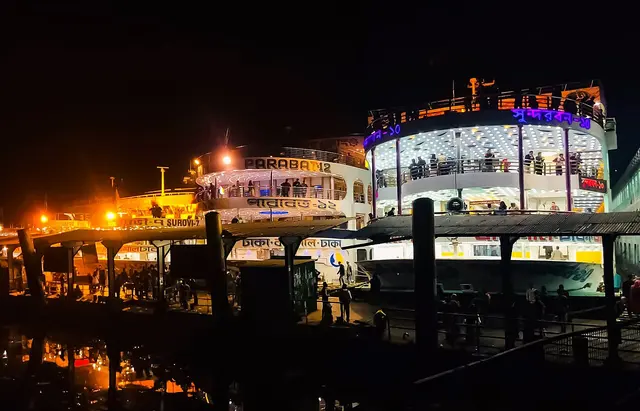
Launches and boats
- On overnight launches, book a cabin that locks rather than a deck space, and keep valuables with you.
- Never board an overloaded launch or a small boat in bad weather or fog.
- Wear a lifejacket on small boats and insist that one is available.
Accommodation tips
- Book your first night in advance, and plan to arrive before dark.
- Read recent reviews, especially reviews by women.
- Prefer properties on a lit, busy street, with a staffed reception at night.
- Check that the room door locks properly from inside. A small rubber doorstop adds peace of mind.
- Do not share your room number loudly at reception, and do not open the door to unexpected visitors.
- Some hotels ask for NID or passport details at check-in. This is normal.
Money, phone and documents
- Get a local SIM for data and calls. Coverage is good in cities and patchy in the hills and haor.
- Carry a power bank and keep your phone charged.
- Split your cash across two places. Use bKash or Nagad and cards where possible.
- Keep photocopies or photos of your NID or passport, and leave a copy with someone at home.
- Share your live location and itinerary with a friend or family member.

Health and hygiene on the road
- Toilets: public toilets are scarce and often poorly kept, especially for women. Plan stops at restaurants, hotels, railway station waiting rooms and highway food courts. Carry tissues, hand sanitiser and a small pack of wet wipes.
- Periods: sanitary pads are sold in most pharmacies and general stores, even in small towns, but bring your preferred products for remote areas such as the hills, the haor or a Sundarbans cruise.
- Water and food: drink bottled or filtered water, and choose busy food stalls. Oral saline (ORS) is sold everywhere and is useful in the heat.
- Medicines: carry basic medicines and any prescriptions. Pharmacies are common in towns, but not in remote areas.
A simple first solo trip
If you have never travelled alone in Bangladesh, a two-day trip to Sreemangal is an easy start:
- Take a daytime intercity train from Dhaka (about 4.5 hours), booked in an AC chair through the official e-ticket site.
- Check in to a stay you booked in advance, close to the town centre, before dark.
- Next morning, go to Lawachara National Park with a registered guide, or join other visitors on the main trail.
- Visit the tea estates by CNG with an agreed fare, and try seven-layer tea in town.
- Take the afternoon train back, arriving in Dhaka in the evening.
Once that feels comfortable, try a longer trip such as Sylhet, Cox's Bazar or a heritage circuit, or join a group tour for the hills and the Sundarbans.
Tourist Police and emergency numbers
| Service | Number | Notes |
|---|---|---|
| National emergency | 999 | Free, 24/7: police, fire service, ambulance; harassment and stalking count as emergencies |
| Tourist Police helpline | 01320-222222 / 01887-878787 | 24/7 helpline launched in Sept 2023 |
| Violence against women and children | 109 | Toll-free government helpline |
| Child helpline | 1098 | For children at risk |
| Government information | 333 | National information and services line |
About the Tourist Police: Bangladesh Police has a dedicated Tourist Police unit, set up to protect visitors and tourist spots. Its officers are posted at major destinations such as Cox's Bazar. If something goes wrong, or you just feel uncomfortable, approach them or call the helpline. The full list of regional contacts is on the Bangladesh Police website. Phone numbers can change, so confirm the helpline when you arrive, for example by asking your hotel.
If you are harassed:
- Move towards other people, especially women or families, and say clearly and loudly that you need help ("Help!" or "Shahajjo korun!").
- In a vehicle, ask the driver or conductor to stop, and get off in a busy place.
- Call 999 if you are in danger. Note the place, time and any vehicle number.
- Report it to the Tourist Police, or to the nearest police station, and tell your tour operator or hotel.
Group tours: a safe, sociable option
Travelling solo does not have to mean travelling alone. A small fixed-departure group tour lets you join others with the same plan:
- Transport, rooms and local guides are vetted in advance.
- You have company on long journeys and at night.
- Costs for jeeps, boats and guides are shared, so it is often cheaper than going alone.
- Remote areas such as the hills, the haor and the Sundarbans become much easier to visit.
Every BanglaTrips tour is a small group tour with a fixed date, a seat limit and one price per person. Many travellers book a single seat. Browse departures on pages such as Sreemangal & Lawachara or Sundarbans, and see our budget travel guide for ways to keep costs down.

Pre-trip checklist
- [ ] Save 999, 01320-222222 and 109 in your phone and on paper.
- [ ] Share your itinerary, hotel names and train or bus details with someone at home.
- [ ] Book your first night's stay and plan to arrive in daylight.
- [ ] Register on the railway e-ticket site and book official tickets only.
- [ ] Check the access status of your destination (hill tracts, Saint Martin's, Sundarbans).
- [ ] Pack modest, loose clothing and a scarf.
- [ ] Carry ID copies, a power bank and some cash in two places.
- [ ] Get a local SIM or eSIM with data.
On-the-road checklist
- [ ] Arrive before dark, and avoid empty streets, beaches and ghats late at night.
- [ ] Agree on fares before getting into a CNG, rickshaw or boat.
- [ ] Use ride-hailing apps in cities and share your trip.
- [ ] Sit near women or families on buses and trains.
- [ ] Do not accept food or drinks from strangers in transit.
- [ ] Lock your room and keep valuables with you on launches.
- [ ] Trust your instincts. If a situation feels wrong, leave.
Frequently asked questions
Is Bangladesh safe for solo female travellers? Generally yes, with planning. Expect curiosity and some unwanted attention, and take care in crowds and at night.
What is the emergency number? 999, free, for police, fire service and ambulance. Harassment and stalking count as emergencies.
What is the Tourist Police helpline? 01320-222222 (also 01887-878787), launched in 2023. Confirm it locally.
Is there a helpline for women? Yes, 109 for violence against women and children. Call 999 in immediate danger.
What should women wear? Loose clothes covering shoulders, chest and knees, plus a scarf for religious sites.
Which places are best for a first solo trip? Sreemangal, Sylhet city, Old Dhaka with a guide, Sonargaon and Cox's Bazar's main beach area.
Is a group tour a good option? Yes. It gives you company, vetted logistics and shared costs, especially for remote areas.
Last updated: October 2026
Frequently asked questions
Is Bangladesh safe for solo female travellers?
Many women travel in Bangladesh alone or in small groups without serious problems, but staring, unwanted attention and occasional harassment are common, especially in crowds. Planning your transport and stays, dressing modestly, avoiding late nights in quiet places and using trusted operators make a big difference.
What is the emergency number in Bangladesh?
Call 999, the free national emergency service, for police, fire service and ambulance. Police guidelines treat violence, harassment or stalking against women and children as emergencies, so you can call 999 for these too.
What is the Tourist Police helpline?
Bangladesh Tourist Police launched a 24/7 helpline for travellers in September 2023: 01320-222222 (also 01887-878787). Tourist Police units work at major tourist spots such as Cox's Bazar. Save the number before you travel, and confirm it locally.
Is there a helpline for women facing violence or harassment?
Yes. 109 is the government's toll-free national helpline for violence against women and children, run by the Ministry of Women and Children Affairs. For immediate danger, call 999.
What should women wear when travelling in Bangladesh?
Loose clothes that cover the shoulders, chest and knees work best: a salwar kameez with a scarf (orna), or loose trousers with a long tunic. Carry a scarf for mosques and shrines. On beaches, many local women swim fully clothed.
Which places are best for a first solo trip?
Sreemangal, Sylhet city, Old Dhaka by day with a guide, Sonargaon, and the main beach areas of Cox's Bazar are good starting points. Remote hill and border areas, and places with security restrictions, are better visited with a group tour.
Is a group tour a good option for solo women?
Yes. A small fixed-departure group tour gives you company, vetted transport and stays, and a local team, while you still travel on your own terms. It is a sensible way to see remote areas such as the hills or the Sundarbans.
Sources
Facts were checked against these sources when the guide was written. Conditions change, so confirm before you travel.
- Bangladesh Tourist Police launches 24/7 helpline for travellers (Bangladesh Monitor, Sept 2023)bangladeshmonitor.com.bd
- Tourist Police (Bangladesh) (Wikipedia)en.wikipedia.org
- When danger strikes, where can women turn? 999 and 109 explained (The Daily Star, 2025)thedailystar.net
- Women and children get less service, more information from 109 (Prothom Alo English)en.prothomalo.com
- Metro rail eases travel for women with reserved coach (Dhaka Tribune)dhakatribune.com
- Information for Australians in Bangladesh: emergency numbers and Tourist Police contacts (Australian High Commission, Dhaka)bangladesh.embassy.gov.au
- Sajek: strike called again, tourists urged to leave (Dhaka Tribune, Oct 2026)dhakatribune.com