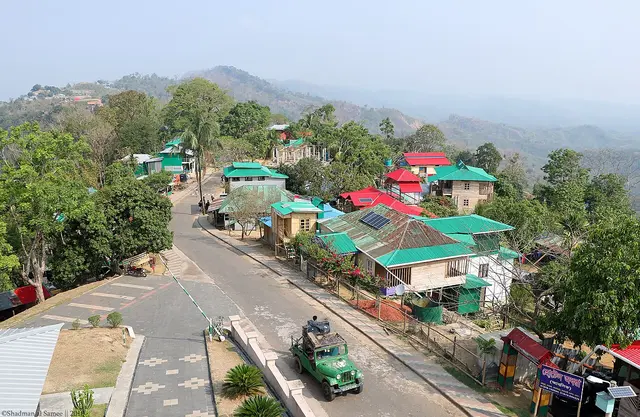
Rangamati Travel Guide 2026: Kaptai Lake, Hanging Bridge, Shuvolong and Boat Trips
A practical guide to Rangamati, the lake town of the hill tracts: Kaptai Lake by boat, the hanging bridge, Shuvolong waterfall, Chakma culture, costs, rules and a ready 2-day itinerary.

Rangamati is the hill tracts at their gentlest. Instead of steep treks, you get water: Kaptai Lake winds between green hills in every direction, and boats are the way to get around. Spend a day on the lake, cross the famous hanging bridge, take a boat to Shuvolong waterfall, and walk through a town where Chakma, Marma and Bengali life mix in the bazaars and Buddhist monasteries. It is one of the easiest hill destinations to reach from Dhaka or Chattogram, and it is a good choice for families.
This guide covers how to get there, the current access situation, the best months, where to stay, what to do on and around the lake, what to eat, a 2-day itinerary and realistic budget ranges.
Travel advisory (October 2026): Rangamati town and Kaptai Lake were not under a tourist ban at the time of writing. However, Sajek, which lies in the far north of Rangamati district, was closed to tourists by the district administration from 22 October 2026 until further notice, after a road blockade and a gunfight on the Sajek road. The three hill districts have seen blockades and temporary tourist bans before, for example in October 2024. Check the latest notice from the Rangamati district administration before you book.
Rangamati at a glance
| Location | Rangamati Hill District, Chattogram division; Bangladesh's largest district by area |
| Known for | Kaptai Lake, the hanging bridge, Shuvolong waterfall, Rajban Vihara, Chakma culture |
| From Dhaka | Bus ~7 h; or via Chattogram (bus ~2.5–3 h) |
| Best time | Sep–Mar; monsoon for waterfalls |
| Typical trip | 2 days / 1–2 nights |
| Budget | About ৳4,500–8,000 per person for 2 days (approximate, shared group) |
| Getting around | Boats on the lake, CNGs and rickshaws in town |
Why Rangamati is special
Kaptai Lake is the largest man-made lake in Bangladesh, covering roughly 688 km². It formed when the Kaptai Dam was built on the Karnaphuli river for hydropower, finishing in the early 1960s. The rising water turned hills into islands and valleys into long, winding channels, which is why the lake looks so unusual from above.
That beauty has a painful history. The reservoir flooded a large share of the district's best farmland and displaced around 100,000 people, most of them Chakma. The old palace of the Chakma Raja still lies under the water. Keep this in mind as you cruise: many of the families you meet, or their parents, lost their homes to the lake.
Rangamati is home to Chakma, Marma, Tanchangya, Tripura, Pankhua, Lushai, Khyang and other communities, as well as Bengalis. You will see this mix in the handloom stalls, the Buddhist monasteries and the food.
How to get to Rangamati from Dhaka
By bus (direct)
Several companies run AC and non-AC coaches from Dhaka to Rangamati, mostly from the Sayedabad, Fakirapul and Kalabagan areas. The trip takes about 7 hours. A night bus gets you there in the morning, ready for a day on the lake.
Via Chattogram
There is no railway or airport in Rangamati. Take a train, bus or flight to Chattogram, then a bus from the city to Rangamati, which takes roughly 2.5–3 hours on a scenic hill road. This route is useful if you want to combine Rangamati with Bandarban or Cox's Bazar.
Getting around
- In town: CNG auto-rickshaws and rickshaws. The town is spread over several hills and peninsulas, so walking between areas takes time.
- On the lake: engine boats can be hired by the hour or for the day from the main ghats, such as those near Reserve Bazar, Tabalchhari and the tourism complex. Agree on the route, the stops and the total time before you board. Ask for life jackets.
Best time to visit Rangamati
| Season | Months | What to expect |
|---|---|---|
| Autumn (শরৎ) | Aug–Oct | Lake full and green, Shuvolong still flowing, fewer storms. The hanging bridge may be submerged in high water. |
| Late autumn and winter | Oct–Feb | Clear, cool days, calm water and comfortable boat trips. Winter is peak season. |
| Spring (বসন্ত) | Feb–Apr | Pleasant weather. The Biju, Sangrai and Boisuk festivals around mid-April are a cultural highlight. |
| Summer (গ্রীষ্ম) | Apr–Jun | Hot. The lake level drops and some channels become shallow. |
| Monsoon (বর্ষা) | Jun–Aug | Waterfalls at their best and the lake rising. Heavy rain, landslides on hill roads and possible bridge closures. |
Our take: September to March is the most comfortable time. If waterfalls matter most, go in late monsoon or early autumn, and accept that the hanging bridge may be closed.
Where to stay in Rangamati
We do not name hotels in this guide. These are the options:
- Town hotels: simple and mid-range hotels in the main town areas, such as Reserve Bazar, Tabalchhari and Banarupa. They are convenient for boat ghats and the bazaar.
- The tourism complex area: government-run accommodation near the hanging bridge, with lake views. It is popular, so book early.
- Lakeside resorts and cottages: a growing number outside the town centre and on the Rangamati–Kaptai road, some with private jetties. Quality varies, so read recent reviews.
- Kaptai: a few options near the dam and the national park, if you want a quieter base.
Tips: ask for a lake-facing room, check whether the price includes breakfast, and confirm the location. Some resorts are only reachable by boat after dark.
Things to do in Rangamati
Take a full-day boat trip on Kaptai Lake
This is the essential Rangamati experience. A typical loop goes from a town ghat to Shuvolong, then stops at small island villages, island restaurants and viewpoints, before returning in the late afternoon. The light is softest after 3 p.m., and sunset on the water is beautiful. Share a boat with a group to cut costs.

Walk across the hanging bridge
The jhulonto setu is a pedestrian suspension bridge of around 335 ft. Bangladesh Parjatan Corporation built it in 1986 at its tourism complex, and it has become the town's symbol. There is a small entry fee. It is closed when the lake rises. In late August 2026, most of the bridge went under water and crossings were suspended. Ask locally whether it is open before you plan your day around it.

Visit Shuvolong waterfall
Shuvolong is in Barkal upazila, about 25 km from town by water. You can only reach it by boat, and the trip is half the fun as the channel narrows between cliffs. The main fall is said to drop around 300 ft after heavy rain. In the dry months it can thin to a trickle, so set your expectations by season. There are steps, a viewing area and a few food stalls at the site.

Rajban Vihara
Rajban Vihara is the most important Theravada Buddhist monastery in Rangamati, set on a peninsula in the lake. Visitors come for its temples, its quiet grounds and its association with a revered monk. Each year after the rainy-season retreat, usually in October or November, it hosts the large Kathin Chibar Dan festival, when robes are offered to monks. Dress modestly, take off your shoes where asked, and keep your voice down.
Chakma Raja's palace and cultural sites
Near Rajban Vihara is the present residence of the Chakma Circle Chief (Chakma Raja). It is a private residence, so view it respectfully from outside unless you are invited in. In town, the tribal cultural institute and its museum have displays on the dress, tools and traditions of the hill communities. Opening times vary, so check before you go.
Handloom shopping
Rangamati is known for handwoven textiles, including the Chakma women's pinon and hadi, shawls and bags. Buy directly from weavers' stalls where you can, so more of the money reaches the makers.

Rangamati at festival time
Around mid-April, at the turn of the Bengali year, the hill communities celebrate their biggest festivals: Biju for the Chakma, Sangrai for the Marma, Boisuk for the Tripura and Bishu for the Tanchangya. Many people combine the names as "Boisabi". You may see flowers floated on the lake at dawn, homes welcoming guests with many-dish meals, and the Marma water festival. It is a wonderful time to visit, but these are family and religious occasions, not shows. Do not walk into courtyards with a camera unless you are invited. Hotels and buses fill up, so book early.
Kaptai and the national park
South of town, the Rangamati–Kaptai road runs along the lake with fine views. At the end you reach the Kaptai Dam area. Note that the dam itself is a key installation, and photography near it may be restricted. Kaptai National Park, established in 1999, protects old forest. Parts of it date to plantations from the 1870s. It makes a good half-day add-on.
Further afield
Sajek Valley lies in Rangamati district, but it is reached by road from Khagrachhari. It was closed to tourists from 22 October 2026. See our Sajek guide and the Khagrachhari page for the route, and check the status first.
Food to try
- Lake fish: fresh fish from Kaptai Lake, cooked as a curry or fried. This is the town's everyday speciality.
- Pahari (hill) dishes: bamboo-shoot curry, vegetables steamed or cooked in banana leaf, sticky rice and dried-fish chutneys. Restaurants run by local communities serve set meals.
- Bamboo chicken: spiced chicken cooked inside a bamboo tube over coals. Order ahead.
- Seasonal fruit: pineapple, jackfruit, papaya and banana from the hills, sold at the bazaar and at the ghats.
Sample 2-day Rangamati itinerary (from Dhaka)
Night 0: Night bus from Dhaka.
Day 1: The lake.
- Arrive in the morning, check in and have breakfast.
- Take a full-day boat trip to Shuvolong waterfall, island villages and an island restaurant for lunch.
- Return at sunset and visit the hanging bridge if it is open.
Day 2: Town and culture.
- Spend a quiet morning at Rajban Vihara.
- Visit the cultural institute museum, then shop for handloom.
- After lunch, take a short drive along the Rangamati–Kaptai road, or a short evening boat ride.
- Take a night bus to Dhaka.
With more time: add a day at Kaptai and the national park, or continue to Bandarban via Chattogram.
Estimated budget (per person, 2 days)
These figures are approximate and assume a group sharing a boat and rooms. Prices change by season and rise on holidays. Verify them before you travel.
| Item | What drives the cost | Notes |
|---|---|---|
| Dhaka ⇄ Rangamati bus | AC or non-AC | Book ahead for weekends |
| Boat hire (full day) | Per boat, split by group | The biggest variable; agree on route and hours |
| Accommodation (1 night) | Simple hotel to lakeside resort | Lake-view rooms cost more |
| Food | Simple meals to island restaurants | Lake fish is good value |
| Entry fees and local transport | Small amounts | Bridge, Shuvolong, CNGs |
| Total (typical) | ≈ ৳4,500 – ৳8,000 | Group trip, shared costs |
Solo travellers, private boats and resorts can push the total above this range.
Safety and rules
- Check the access status. Read the advisory at the top of this guide. Sajek's closure does not automatically mean the town is closed, but blockades can affect roads across the district.
- Wear life jackets on boats, and avoid the lake in storms or after dark. Afternoon thunderstorms are common from April to June.
- Carry ID. Keep your NID or passport and a photocopy with you. There are checkpoints on the hill roads.
- Foreign visitors need prior permission to visit the hill tracts.
- Respect communities and monasteries. Ask before photographing people. Dress modestly at Rajban Vihara and in the villages.
- Keep the lake clean. Do not throw plastic or food packets from boats.
- Monsoon caution: the hill roads to Rangamati can be hit by landslides during heavy rain.
Practical tips
- Book boats in the morning. Full-day trips leave early, and good boats go first on holidays.
- Cash: ATMs are available in town, but island stops and boatmen take cash only.
- Sun and rain: boats have little shade. Bring a hat, sunscreen and a light rain jacket.
- Travelling with family: Rangamati is the easiest hill district for children and older travellers, because most sightseeing happens sitting in a boat. Check that child-size life jackets are available, avoid long boat rides in the harsh midday sun, and take care on the steps at Shuvolong and the ghats, which get slippery in the rain.
- Combine smartly: Rangamati pairs well with Bandarban via Chattogram. Because of the current situation, check road conditions before planning a Khagrachhari–Sajek leg.
Travel with a group
BanglaTrips runs small group tours to the hill tracts, with boats, guides and stays arranged by a local team. We only run trips when areas are officially open. See upcoming departures on our Rangamati page.
Frequently asked questions
Is Rangamati open to tourists in October 2026? The town and lake were not under a ban when we last checked, but Sajek, in the same district, was closed from 22 October 2026. Check the latest notice.
How do I get there from Dhaka? Take a bus (about 7 h), or travel via Chattogram (bus about 2.5–3 h).
Is the hanging bridge open? It closes when the lake floods it, as it did in August 2026. Ask locally.
When should I go? September to March for comfort, or the late monsoon for waterfalls.
How much does it cost? Roughly ৳4,500–8,000 per person for 2 days in a group (approximate).
Can I go to Sajek from Rangamati? Sajek is reached via Khagrachhari, and it was closed to tourists from 22 October 2026.
Do foreigners need permission? Yes. Foreign nationals need prior government permission for the hill tracts.
Last updated: October 2026
Frequently asked questions
Is Rangamati open to tourists in October 2026?
Rangamati town and Kaptai Lake were not under a tourist ban when we last checked, but Sajek, which is in Rangamati district, was closed to tourists from 22 October 2026 after a road blockade and a gunfight. The hill districts see periodic blockades and closures, so check the latest notice from the Rangamati district administration before you travel.
How do I get to Rangamati from Dhaka?
Take a direct bus from Dhaka (about 7 hours), usually overnight. Or take a train, bus or flight to Chattogram and then a bus to Rangamati, which takes roughly 2.5–3 hours. There is no railway or airport in Rangamati.
Is the hanging bridge open?
It depends on the lake level. The bridge goes under water when Kaptai Lake rises after heavy rain, and crossings were suspended on 29 August 2026 for this reason. It usually reopens once the water recedes. Ask locally or check recent news before planning around it.
When is the best time to visit Rangamati?
September to March is the most comfortable time. Shuvolong waterfall is fullest in the monsoon and early autumn, but the hanging bridge may be submerged then. Spring is pleasant, and mid-April brings the Biju, Sangrai and Boisuk festivals of the hill communities.
How much does a Rangamati trip cost?
A 2-day group trip from Dhaka costs roughly ৳4,500–8,000 per person, including bus, a shared boat, a simple hotel and meals. Boat hire is the biggest variable. These figures are approximate, so verify them before you travel.
Can I go from Rangamati to Sajek directly?
Sajek is in Rangamati district, but the normal road route is through Khagrachhari via Dighinala and Baghaihat. Sajek was closed to tourists from 22 October 2026 until further notice.
Do foreigners need permission to visit Rangamati?
Yes. Under rules in place since 2015, foreign nationals need prior permission from the government to visit the Chittagong Hill Tracts, including Rangamati. Apply well in advance and travel with a registered operator.
Sources
Facts were checked against these sources when the guide was written. Conditions change, so confirm before you travel.
- Rangamati hanging bridge goes under water, tourist movement suspended (BSS, 29 Aug 2026)bssnews.net
- Fresh Sajek blockade leaves around 2,000 tourists stranded (TBS, 22 Oct 2026)tbsnews.net
- UPDF opens fire on tourists and law enforcement personnel in Sajek: ISPR (Prothom Alo English, 22 Oct 2026)en.prothomalo.com
- Sajek, Khagrachhari open to tourists after month-long restriction (The Daily Star, Nov 2024)thedailystar.net
- Hanging bridge, Rangamati (Rangamati district portal)rangamati.gov.bd
- Kaptai Lake (Wikipedia)en.wikipedia.org
- Rangamati District (Wikipedia)en.wikipedia.org
- Shuvolong Waterfall (Wikipedia)en.wikipedia.org
- Restrictions on foreign tourists in the hills need a solution (bdnews24 Bangla, 19 Jul 2026)bangla.bdnews24.com
- BanglaTrips destination fact sheet (internal, checked facts: design-previews/BRIEF-B.md)banglatrips.com